Custom solutions for demanding applications


Custom solutions for demanding applications
Our Address
Tridelta Siperm GmbH
Ostkirchstr. 177
44287 Dortmund, Germany
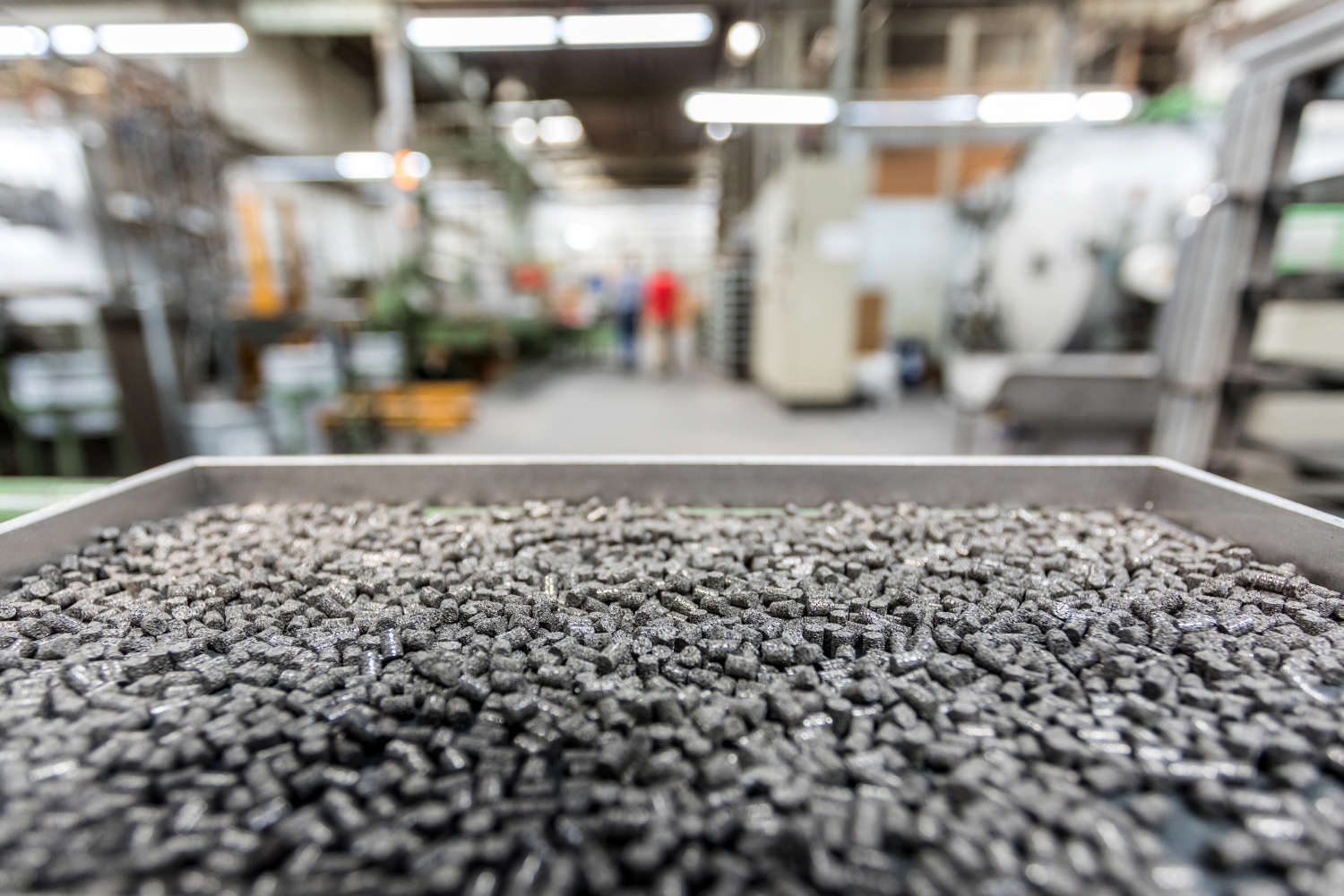
Porous SIPERM® materials are used in technical applications where media need to be guided, distributed, retained or calmed in a targeted manner. The basis of all applications is the defined pore structure, which enables reproducible flow, filter and transport properties.
Depending on the material, porosity level and component geometry, porous sintered bodies take on different functions, for example in filtration, handling of bulk materials, gassing and degassing, sound absorption, safety-related tasks or capillary transport of liquids. The following sections describe these fields of application on the basis of their respective physical operating principles.

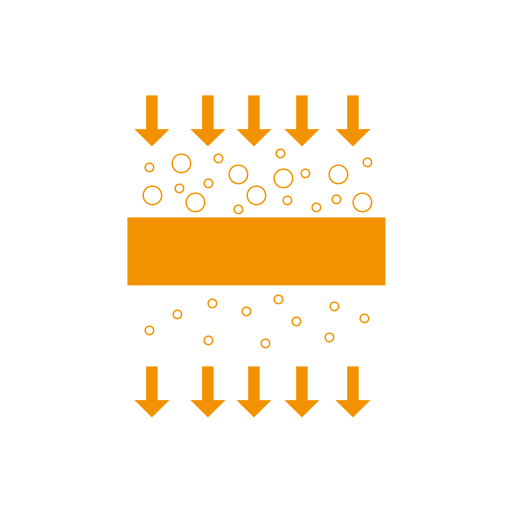
SIPERM® materials are used in filtration processes where defined pore structures and stable operating conditions are required. The materials made of stainless steel, bronze or polyethylene are manufactured as dimensionally stable sintered bodies and enable a uniform flow without local compaction or jet points. This results in reproducible separation performance that remains constant over long periods of use. The pores act as a fixed, geometrically defined barrier so that particles are reliably retained in the filter while the media flow continues in a controlled manner.
The appropriate choice of material depends on the temperature range, medium and cleaning requirements. Stainless steel is used for high temperatures or chemically demanding media, bronze is characterized by low pressure losses and homogeneous flow conditions, while polyethylene is preferred when complex geometries or media-resistant solutions are required. Typical applications range from gas and liquid filtration to protective functions in measuring and analysis systems and filtration tasks in hydraulic or pneumatic processes.
All materials retain their functionality even after repeated cleaning cycles, as the pore structure remains unchanged. This makes SIPERM® filter elements suitable for applications that require long-term stable flow and pressure conditions.

SIPERM® materials are used in bulk solids handling to specifically stabilize the flow behaviour of fine or cohesive powders. The porous elements serve as evenly flowing surfaces through which gas is introduced into the bulk bed in a controlled manner. This reduces internal frictional forces and typical faults such as bridging, material compaction or irregular discharge occur much less frequently. The uniform gas distribution is maintained even with different fill levels and varying material properties, as the pore structure remains unchanged and stable under load.
SIPERM® elements are installed as aeration floors, wall segments or modular surfaces in silos, hoppers and conveyor systems. They are suitable for both continuous and intermittent discharge processes and support a reproducible material flow regardless of external process fluctuations. The materials withstand mechanical loads, vibrations and cleaning processes without changing the flow properties.
Typical applications can be found in systems for processing plastic powders, mineral materials, pigments, food powders or fine industrial bulk materials. SIPERM® supports safe, controlled discharge and helps to minimize downtimes and unsteady process conditions.

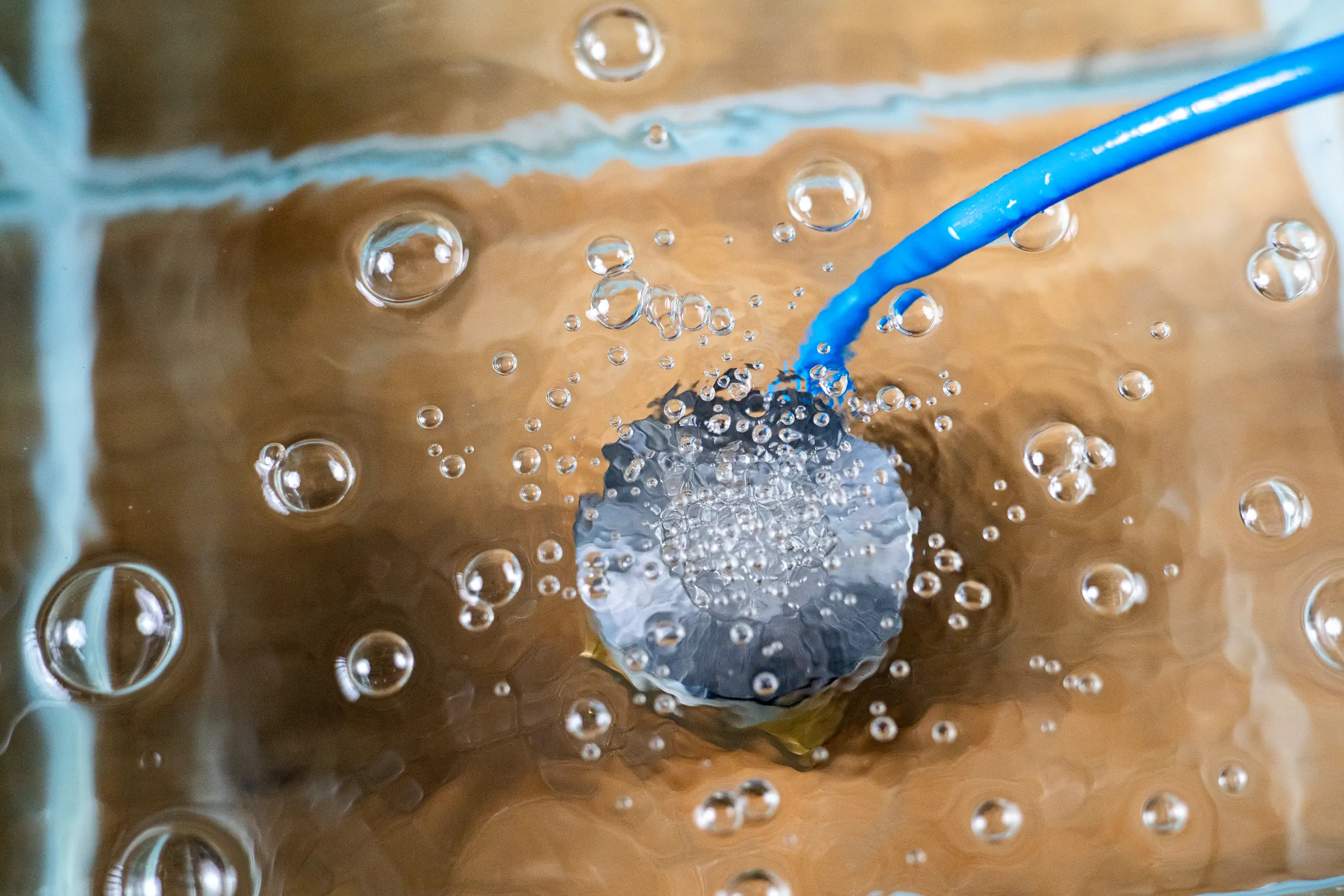
SIPERM® materials are used in applications where gases have to be evenly introduced into solids, powders or process areas or discharged in a controlled manner. The porous structure enables a defined, large-area distribution without a punctual jet effect. This creates stable pressure and flow conditions, which are crucial for many processes. When introducing gases, the material is used for homogeneous distribution; when degassing, it serves as a barrier-free discharge surface through which trapped air or process gases can reliably escape without dissolving particles or impairing the medium.
The function is maintained regardless of external influences, as the pore structure is mechanically stable and permanently permeable. SIPERM® elements can be integrated into existing containers, conveyor systems or reaction chambers and support uniform process conditions even with changing loads. Typical applications include inerting processes, gas exchange in powder beds, the stabilization of reaction or temperature-dependent processes and applications in which a defined gas supply or controlled venting is required.

SIPERM® materials are used in pneumatic and gas-conducting systems to reduce noise caused by the discharge of compressed air or process gases. The porous structure of the sintered bodies ensures uniform flow stabilization, as the gas flow is slowed down and distributed as it passes through the fine channels. This leads to a significant reduction in sound pressure peaks and stabilizes the acoustic behaviour of the system. The damping effect results exclusively from the material structure and remains independent of external installation conditions or the geometry of the component.
SIPERM® elements can be made of stainless steel, bronze or polyethylene. The choice depends on the temperature, medium and mechanical stress. Stainless steel is used when high thermal resistance is required; bronze enables low pressure losses; polyethylene is suitable for lightweight or complex-shaped components. The elements work without moving components and are therefore particularly low-maintenance.
Typical areas of application are in valve technology, pneumatics, measuring systems, exhaust air lines and systems in which defined noise reduction is required.

SIPERM® R is used in safety applications when gases need to be reliably guided or re-ignition prevented. The porous stainless steel structure acts as a solid barrier over which hot or reacting gases are distributed and their temperature reduced. This supports the function as a flashback arrestor within systems in which explosive or flammable gas mixtures can occur. The effect results from the stable material matrix, whose properties do not change even under repeated thermal and mechanical loads.
SIPERM® elements can be integrated into housings, pipes, valve components or measuring systems and enable compact designs, as no additional moving safety parts are required. The components are pressure-resistant, temperature-resistant and insensitive to process fluctuations, ensuring reliable long-term operating conditions. Typical areas of use include sensor applications, gas-conducting systems in industrial plants and areas where defined protective functions are required to prevent unwanted reactions or backflow.

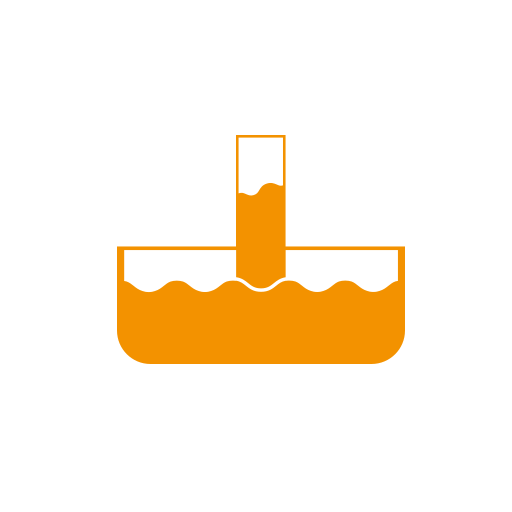
SIPERM® materials are used for applications in which liquids need to be transported, distributed or temporarily stored in a controlled manner. The pore structures act as fixed, capillary-active channels through which liquids are evenly absorbed and transported. Transport takes place without moving components and remains stable regardless of external pressure or temperature changes, as the capillary effect arises directly from the porous material structure. This means that constant moisture supply, defined wetting surfaces or uniform storage processes can be reliably achieved.
Depending on the application, the materials can be designed with different pore sizes and geometries so that the transport speed and retention capacity can be adapted to the requirements of the system. Typical areas of use are in analysis and dosing technology, in devices for defined liquid distribution and in technical applications where reproducible liquid intake or release is required. Thanks to the dimensionally stable sintered structure, the function is maintained even under continuous operation or changing loads. SIPERM® thus enables capillary processes that do not require additional components or complex mechanisms.
Porous materials enable an even, defined flow over the entire surface of the component. This allows media to be distributed homogeneously, pressure losses to be controlled and process fluctuations to be reduced. The pore structure acts as a stabilizing flow element without moving components.
The adjustable pore structure provides reproducible flow characteristics for aeration, degassing, filtration or sensor protection. The media flow remains stable, even under changing operating conditions. This is particularly important in systems that require constant process parameters.
Porous elements through which gas flows loosen up bulk materials and reduce frictional and cohesive forces. As a result, powders flow out of silos and hoppers more evenly and are less prone to bridging and shaft formation. Fluidization stabilizes critical process areas and ensures predictable discharge.
The homogeneous gas distribution creates defined flow zones in the bulk material and improves flowability, especially for particle sizes below 0.2 mm. This technology is central to the discharge, homogenization and conditioning of demanding powders.
Porous structures enable an even exchange of gases with liquids or powders. Trapped air can escape, while process gases are introduced in a finely distributed manner. The uniform permeation improves process stability and prevents local overloads.
Applications include pressure relief, process degassing and the defined supply of inerting or reactive gases. The pore network ensures reproducible flow conditions regardless of geometry or media viscosity.
Porous filters separate particles from media flows and at the same time enable a laminar, uniform flow. Depending on the pore size, defined separation efficiencies and controlled pressure losses are achieved. The components work without moving elements and are mechanically stable.
Particles are retained inside the pore structure, resulting in constant flow conditions. The technology is used in gas filtration, liquid purification and the protection of sensitive measuring systems.
Porous components homogenize the gas flow and protect sensors from particles and mechanical stress. The medium reaches the measuring surface at a stable speed, which reduces measuring errors caused by turbulent fluctuations.
The combination of calming and retention improves signal stability and at the same time protects against external influences. In safety applications, metal variants can also serve as a flame arrester.
When compressed air is discharged, porous structures branch the flow path and reduce the discharge velocity. This reduces noise emissions and dampens impulse-like noise peaks. The components work without moving parts and are low-maintenance.
The energy of the escaping medium is distributed in the pore network and partially converted into heat. This stabilizes the operation of valves, cylinders and other pneumatic components.
Porous elements allow air to be extracted directly from the powder volume. Fine-grained materials can thus be significantly compacted without changing their particle structure. This facilitates transportation, dosing and further processing.
Due to the defined permeation, air is gently extracted, whereby reproducible degrees of compression are achieved. The technology is widely used in roller processes and container ventilation systems.
Porous metal structures can prevent flame transmission, as the pore network absorbs heat and interrupts the flame front. This allows explosive mixtures to be safely separated from sensitive areas.
This function is used in valve protection, venting systems and measuring devices. The effectiveness depends on the pore size, wall thickness and material and is designed on the basis of limiting conditions.
The pore size controls the flow rate, pressure loss and separation behavior. Small pores increase the retention, but increase the pressure loss. Larger pores allow higher flow rates and are suitable for aeration or fluidization.
The selection is based on the planned media type, flow conditions and function (filtration, ventilation, protection, damping). Pore distributions allow fine tuning of the behavior.
Porous surfaces generate an evenly distributed gas flow over the entire cross-section, avoiding localized interference or jet points. This improves process stability and prevents uneven loads in the medium.
Especially in fluidization, drying, homogenization or sensor protection, the two-dimensional flow leads to reproducible results. Point sources cannot provide such uniformity.
The application limits are determined by temperature resistance, medium compatibility and mechanical load. Metallic variants are suitable for high temperatures and aggressive media, while polymer-based materials are thermally limited but have high chemical resistance.
The selection is based on process conditions such as temperature profile, pressure, medium and cleaning methods. The pore structure must remain stable in order to ensure defined flow and filter properties.
Porous elements can be installed in existing systems as plates, pipes, inserts or molded parts. Thanks to defined dimensions or welding, pressing and connection geometries, they can be integrated with a precise mechanical or fluidic fit without fundamentally changing the process design.
The integration takes into account flow direction, sealing surfaces, pressure ranges and cleaning requirements. In many cases, porous components replace mechanical elements or supplement existing structures for process stabilization.
We are happy to advise you – simply contact us by phone, via email or by using our contact form.
Tridelta Siperm GmbH
Ostkirchstr. 177
44287 Dortmund, Germany



 Menu
Menu