Custom solutions for demanding applications

Custom solutions for demanding applications
Our Address
Tridelta Siperm GmbH
Ostkirchstr. 177
44287 Dortmund, Germany
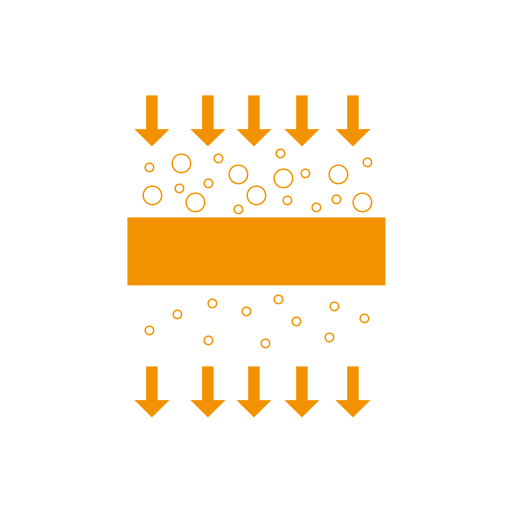
Forming describes the targeted supply and uniform distribution of a gas within a system in order to create or maintain defined process conditions. In contrast to aeration, forming is not about pressure equalization or passive gas passage, but about actively influencing the gas atmosphere.
Typical forming gases are, for example, protective or process gases that are used to displace ambient air, stabilize process conditions or evenly pressurize volumes. The uniform distribution of the gas is crucial in order to avoid local concentration differences.
Porous SIPERM® materials are suitable for forming applications where a homogeneous, flat gas introduction is required and the gas is to be introduced into a process in a controlled manner.
Forming elements are used in a variety of industrial applications, including for:
uniform introduction of protective or process gases
Displacement of ambient air from defined volumes
Stabilization of process atmospheres
Avoidance of local gas flows or turbulence
reproducible pressurization of system areas
The focus is always on uniform gas distribution. Point gas inlets often lead to flow channels, uneven concentrations or inefficient gas consumption. Porous materials enable gas to be released evenly over the entire active surface.
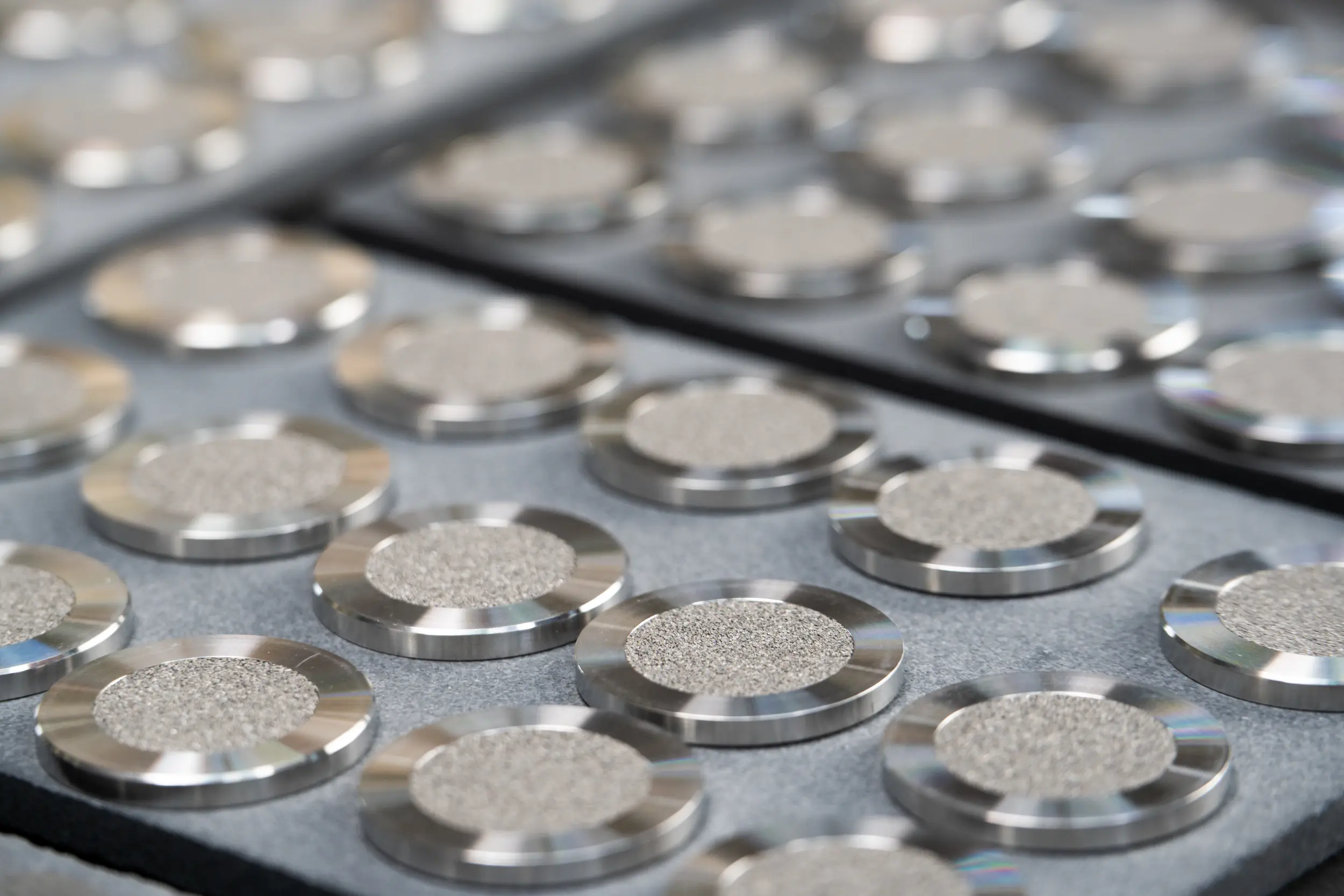
The pore structure must be designed in such a way that the gas escapes evenly over the entire surface. The aim is a defined, reproducible gas distribution without preferred exit points.
Forming elements are often subjected to constant or controlled gas pressure. The porous structure must withstand this pressure permanently without compacting or changing its permeability.
Depending on the process, elevated temperatures or chemically contaminated gases may occur. The material used must remain functionally stable under these conditions.
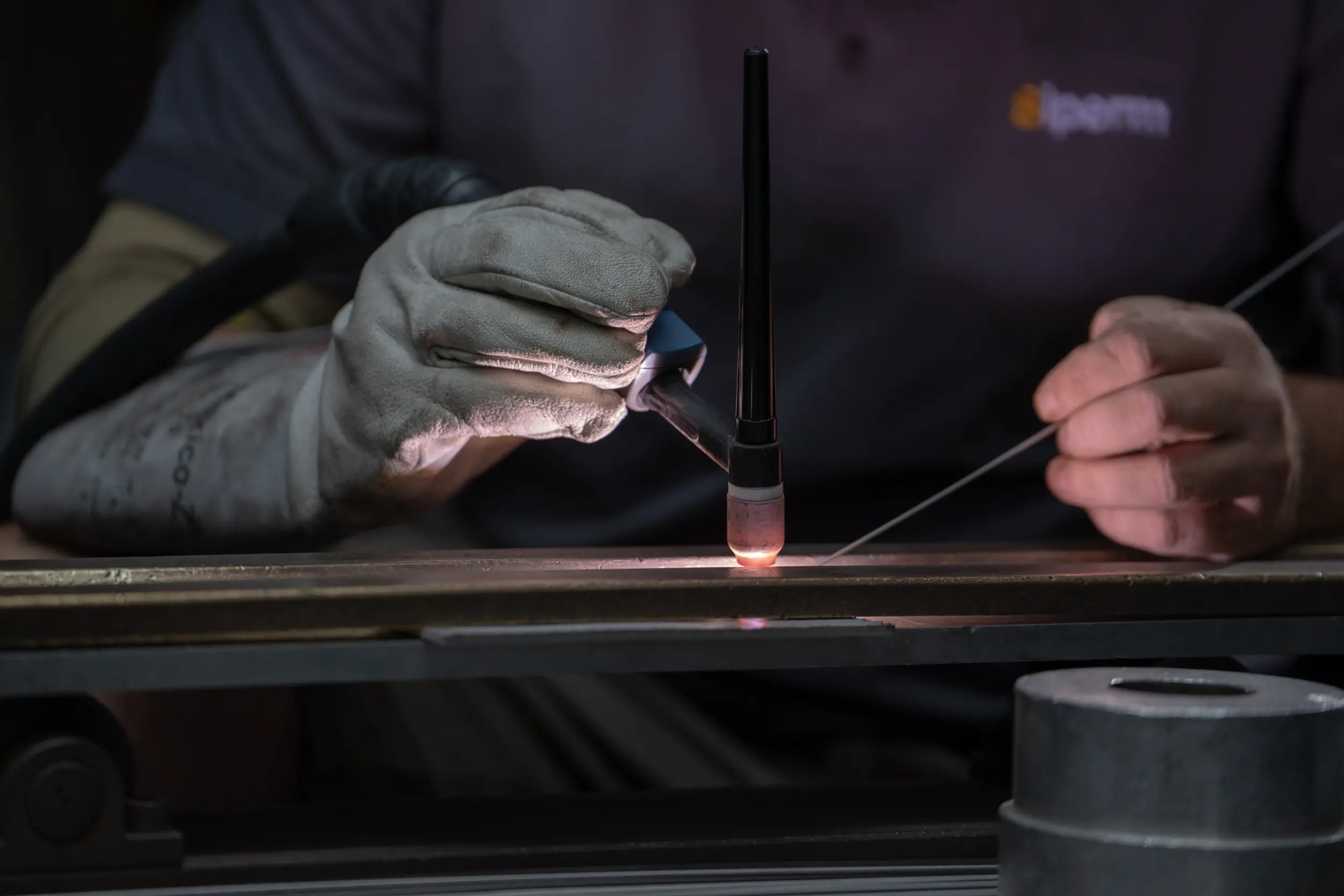
Forming is an established process in the welding of high-alloy Cr-Ni steels in order to maintain the corrosion resistance of the materials. Even moderate oxidation of the weld root or the heat-affected zone can significantly impair the material properties.
For particularly gas-sensitive materials such as molybdenum, zirconium or titanium, forming during welding is not optional, but mandatory.
During forming, the weld root and the adjacent heat-affected zone are continuously exposed to shielding gases or shielding gas mixtures during the welding process. Typical gases are
Argon
Nitrogen
Argon-hydrogen mixtures
Nitrogen-hydrogen mixtures
The controlled supply of shielding gas displaces the oxygen-containing ambient air. This reliably protects the area of the weld seam facing away from the welding electrode from oxidation and scaling.
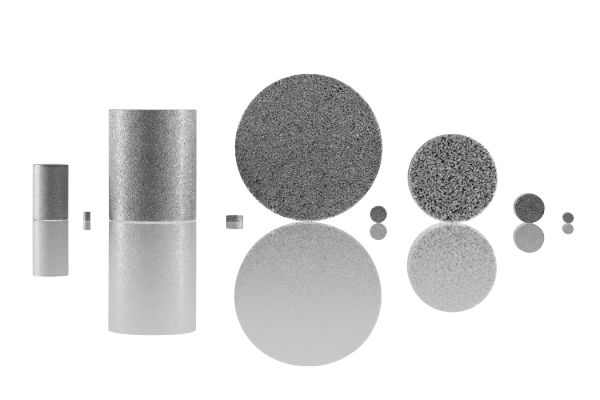
A decisive factor for the success of the forming process is the type of gas supply. Turbulent flows lead to an uneven distribution of shielding gas and can cause localized oxygen ingress.
A laminar, uniform flow is therefore desirable. This can be achieved by using diffusers made of porous sintered metal.
Porous diffusers made of sheet metal, pipes or shaped components distribute the supplied gas over their entire surface. The shielding gas escapes evenly from the porous material and forms a stable protective atmosphere in the area of the weld seam root.
The use of porous sintered materials for forming offers several technical advantages:
Uniform, laminar gas distribution
Reliable displacement of oxygen-containing atmosphere
Reproducible process conditions
Reduction of oxidation and scaling
Stable shielding gas atmosphere even for longer weld seams
If the forming process is carried out correctly, there is often no need for subsequent mechanical or chemical reworking of the weld seams.
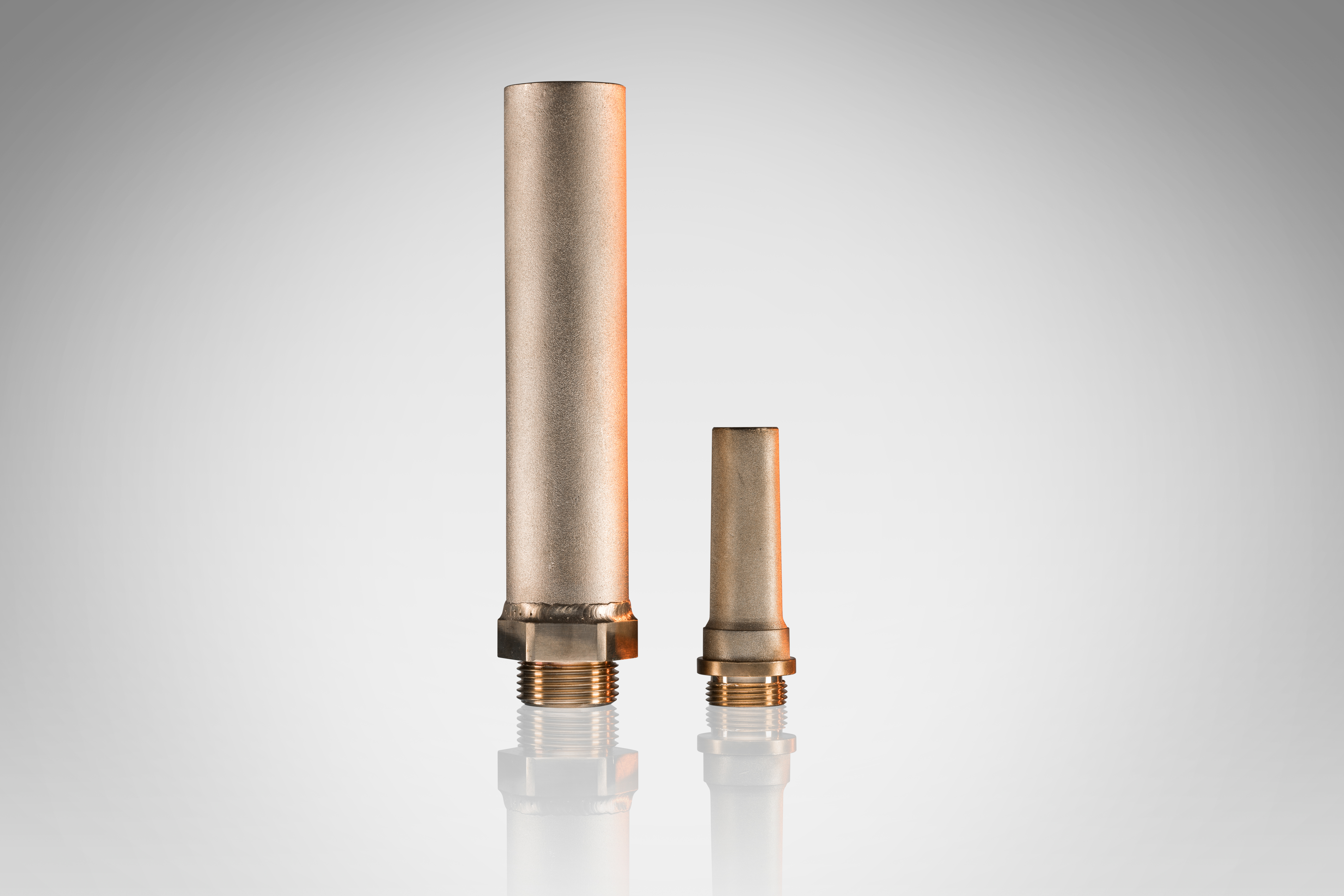
Porous metallic SIPERM® materials are used for welding gas forming, as they enable an even, laminar distribution of the shielding gas even under welding process conditions. The porous structure serves as a diffuser through which the forming gas escapes over a large area and reliably displaces the oxygen-containing atmosphere in the area of the weld root and the adjacent heat-affected zone.
In practice, SIPERM® R 35 made of porous stainless steel and SIPERM® B 20 made of porous bronze have proven to be particularly suitable for this purpose. These porosity classes enable controlled gas release with sufficient mechanical and thermal stability and support the formation of a stable protective gas atmosphere without turbulent flows.
The choice between stainless steel and bronze is application-specific and depends on the welding conditions, in particular the temperature load, installation situation and shielding gas used. Both materials are suitable for use as porous diffusers in the form of sheets, pipes or customized components.
We are happy to advise you – simply contact us by phone, via email or by using our contact form.
Tridelta Siperm GmbH
Ostkirchstr. 177
44287 Dortmund, Germany


 Menu
Menu
 Call
Call