

Custom solutions for demanding applications
Siperm® HP
Our Address
Tridelta Siperm GmbH
Ostkirchstr. 177
44287 Dortmund, Germany
Contact us for a personal consultation
Polyethylene / PE-UHMW / HDPE
Temperature resistance
approx. 70°C oxidizing atmosphere
For more information and technical data, please refer to the PDFs available above
Plates
Size: 1000 x 1000 mm, 1200 x 1000 mm
Thickness: 3 - 20 mm
Other formats (welded constructions and cuts) on request
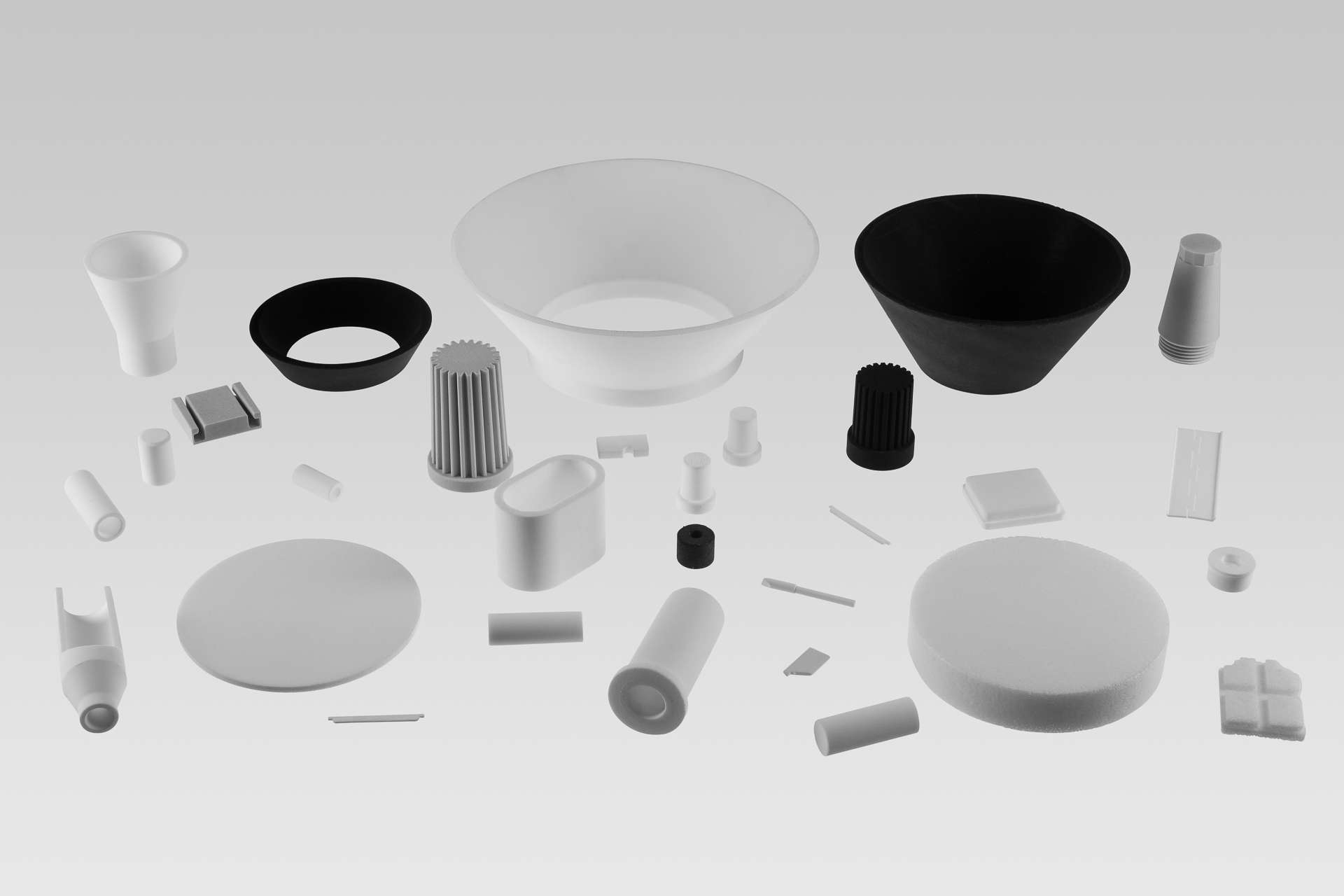
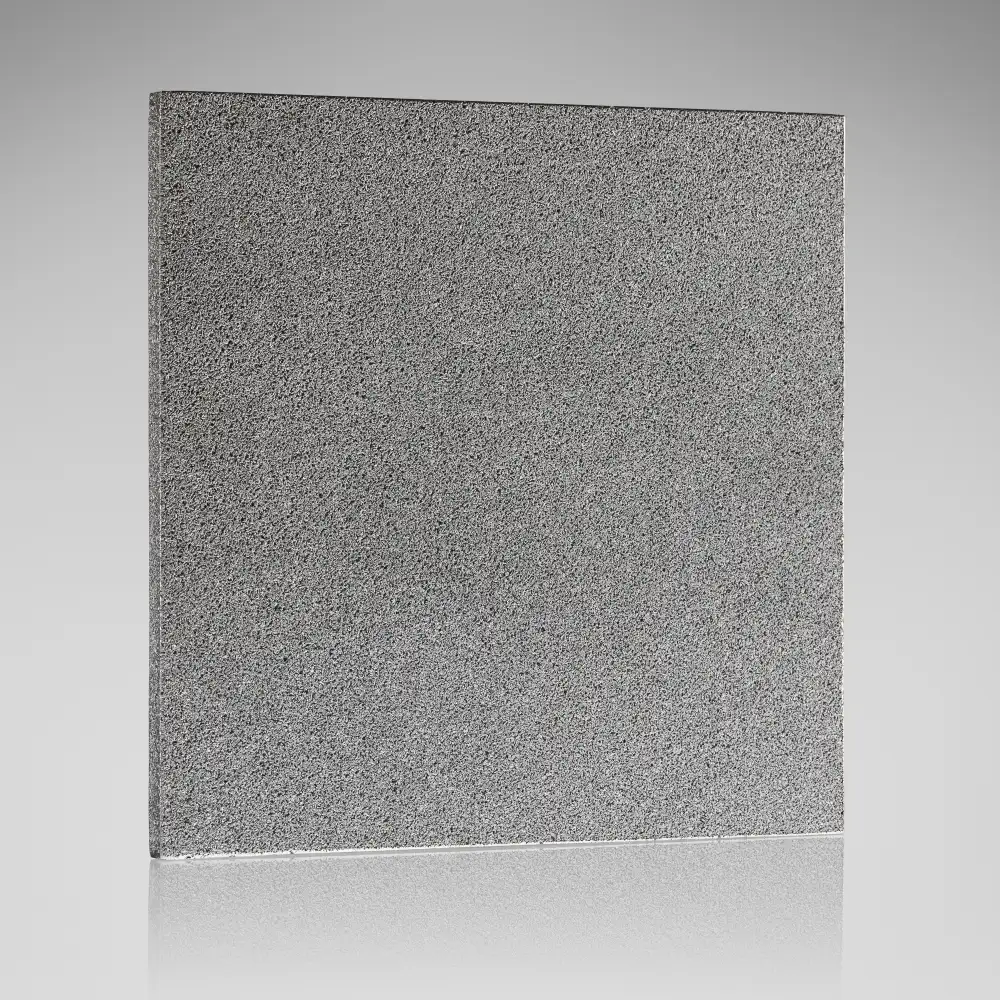
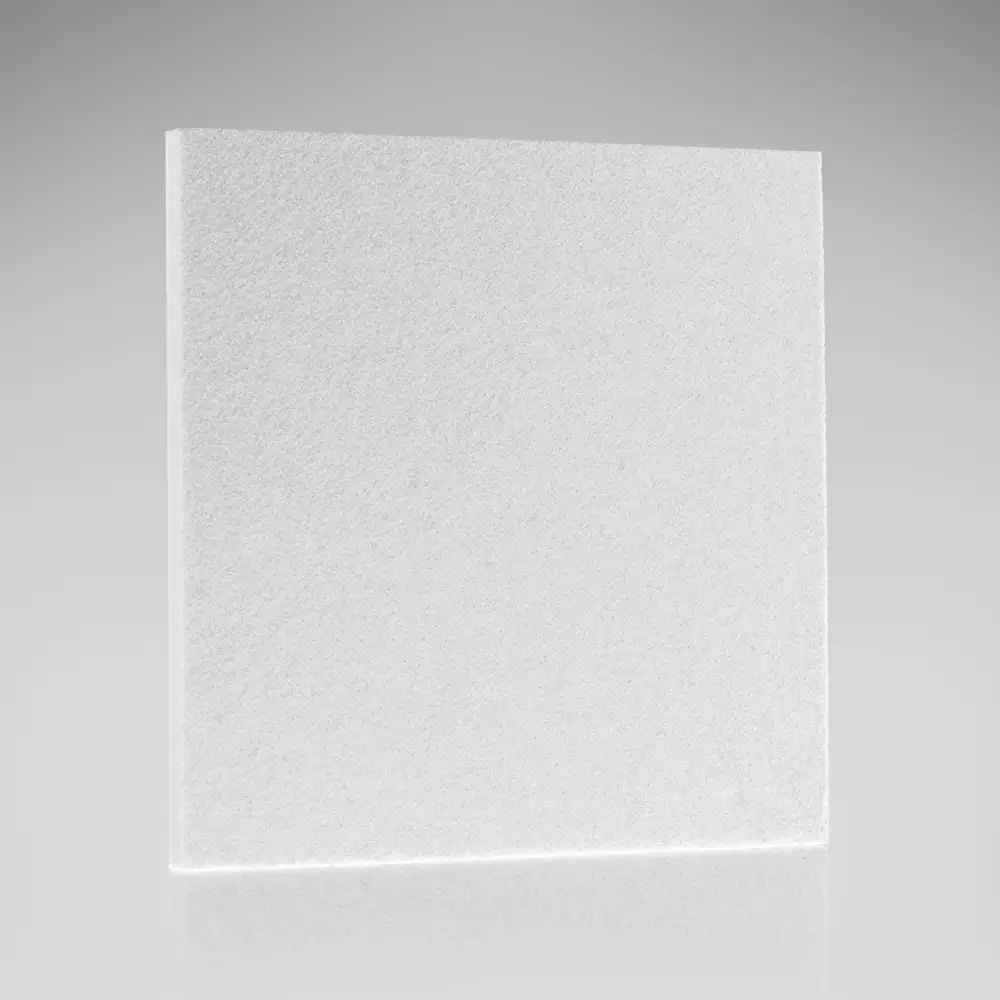
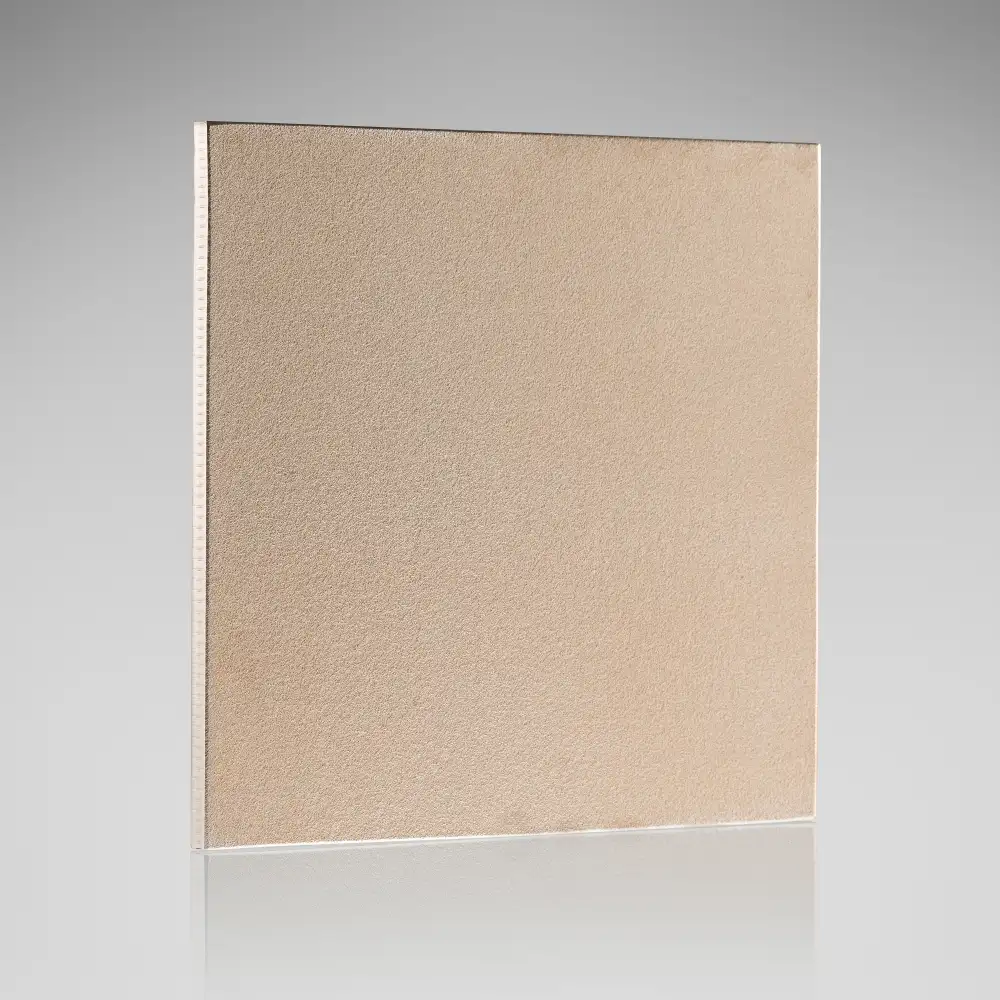
Sheets made of SIPERM® HP consist of porous sintered polyethylene (PE-UHMW/HDPE) with a defined pore structure. The pores are completely open and evenly distributed to ensure reproducible permeability over the entire surface. The panels are particularly suitable for applications in which ventilation, pressure equalization or defined surface flow at moderate temperatures are required.
SIPERM®-HP sheets are very light, chemically resistant and electrically insulating. Due to the soft polymer matrix, no mechanical processing may be carried out on surfaces through which the flow passes, as this would lead to pore blockages. Machining is only possible on solid edge areas or connection geometries. The sheets are used without subsequent thermal shaping, as temperatures above approx. 70 °C impair the pore structure.
Typical areas of application are pressure equalization surfaces, venting zones, porous covers and functional layers in systems that require corrosion-free and flow-stable materials.
Tubes
Seamless and welded construction - dimensions on request
SIPERM® HP is also available in tubular geometries. The pores are openly connected across the entire wall thickness so that both radial and axial flow is possible. The pipes are suitable for low-pressure applications and temperatures up to around 70 °C.
Due to the polymer material base, connections are made using push-fit, clamp or housing solutions. The pipes are used in applications where pressure equalization, venting or uniform gas flow with high chemical resistance are required.
Circular blanks and molded parts
We have a large range of tools available for the production of circular blanks and molded parts of various sizes. We will be happy to inform you about available dimensions and special shapes on request.
Circular blanks and molded parts made of SIPERM® HP are given their final geometry directly in the sintering tool. The pore structure remains uniform over the entire cross-section and ensures a defined flow. The components are suitable for compact venting, pressure equalization or distribution functions in housings and modules.
Installation is typically by press-fitting, insertion or suitable retaining structures. Due to its low density, chemical resistance and electrical insulation, SIPERM® HP offers advantages in environments where metallic materials cannot be used or are undesirable.
Fluidizing units
Seamless fluidizing trays - dimensions on request
Fluidizing trays as welded construction according to customer requirements
For applications in the low-pressure range, SIPERM® HP enables uniform gas distribution over porous surfaces. The materials are suitable for gentle agitation or loosening of fine-grained or sensitive bulk materials, provided the process temperatures remain below approx. 70 °C.
The material properties are particularly advantageous in environments where corrosion-free, electrically non-conductive fluidization elements are required. Mechanical and thermal loads must be kept low so that the pore structure remains stable in the long term.
Filter cartridges
Seamless and welded construction - dimensions on request
Filter cartridges made of SIPERM® HP enable defined flow and retention functions in the low-pressure range. The porous structure ensures a uniform flow and is suitable for venting, pressure equalization or gas filtration tasks at temperatures up to around 70 °C.
The components are chemically resistant and electrically insulating and are typically used in measurement, electronics or appliance technology. Cleaning is carried out using rinsing processes or counter-current processes under moderate conditions. Thermal or aggressive chemical processes are not intended.
Automation
Automated production and quality inspection
SIPERM® HP can be manufactured and tested fully automatically in stable, reproducible processes so that each batch has constant pore and flow characteristics. This means that series production quantities in the millions can be realized. The automated process control also enables tight tolerance control, which is crucial for applications with defined flow or venting parameters.
SIPERM® HP
Material basis and positioning
SIPERM® HP is a porous sintered material based on polyethylene (PE-UHMW / HDPE) that was developed for technical applications in which defined flow, venting, aeration or pressure equalization functions are required under moderate mechanical and thermal conditions. The material consists of polyethylene particles of defined grain sizes that are sintered under controlled conditions. During this process, the particles bond by partial fusion at their contact surfaces, while an open pore network is maintained.
In contrast to metallic sintered materials, SIPERM® HP is significantly lighter and has different mechanical and thermal properties due to its polymer structure. The material is preferably used where low density, good chemical resistance, electrical insulation or corrosion-free process control are required. The porosity is reproducible and determined in accordance with standards, so that flow characteristics and pressure loss behavior are predictable.
SIPERM® HP is particularly suitable as a functional material in plant engineering that performs defined flow and venting tasks. The material fulfills these functions without additional structural components and remains dimensionally stable even under repeated stress.
Microstructure and characteristics of the pore network
The pore structure of SIPERM® HP is created by the controlled sintering of PE particles, during which the particle surfaces fuse together while the spaces between them remain open pores.
Distribution and size of the pores
The pore sizes depend directly on the particle fraction used. Depending on the quality, SIPERM® HP covers typical pore sizes in the range of around 10 to 100 µm. The pore size distribution is relatively narrow, as PE granules with a defined particle size are used. The permeability is determined in accordance with the relevant test standards and serves as the basis for the technical design.
This well-defined structure creates a uniform flow and prevents localized bottlenecks. The wall thickness distribution also remains constant thanks to the homogeneous sintering process.
Material-related properties of the polymer structure
Polyethylene has specific advantages in the porous state:
-
Very low density, significantly lower than metallic sintered materials
-
Good elasticity with moderate loads
-
Chemical resistance to many media
-
Electrical insulation
-
Corrosion-free behavior
These properties complement the flow-related functions and open up fields of application in which metallic porous materials would be unsuitable.
Flow behavior and functional characteristics
The flow behavior of SIPERM® HP follows the same physical principles as metallic sintered materials, but the polymer structure influences the pressure losses and energy conversion differently in some cases. The flow characteristics are shown as laminar and turbulent components.
Laminar flow
At low volume flows, the laminar area predominates. The flow is uniform and the pressure loss increases proportionally to the velocity. The material does not generate any locally accelerated flow zones as there is no directional channel structure.
Turbulent flow
At higher velocities, deflections in the branched pore channels lead to a turbulent flow component. This proportion causes a disproportionate increase in pressure loss. The specific coefficients for this are defined depending on the material.
Functional effect in the process
SIPERM® HP takes on several functional roles simultaneously:
-
Uniform ventilation or ventilation over defined areas
-
Damping of pressure peaks in the pore system
-
Flow calming in the event of gas or air movements
-
Defined retention of certain particle sizes
-
Controlled flow through reproducible pore structure
The combination of polymer matrix and porosity makes SIPERM® HP suitable for applications where flexible, lightweight and chemically robust porous materials are required.
Mechanical properties and strength behavior
Due to its polyethylene base, SIPERM® HP has a mechanical behavior that differs significantly from metallic sintered materials. The material has a comparatively low density and significantly higher elasticity. These properties mean that mechanical loads tend to be buffered by elastic deformation before structural damage occurs.
The strength is created by the sintered connections between the polymer particles. These connection points are permanently stable and distribute mechanical loads across the entire pore network. Although SIPERM® HP does not achieve the strength of metallic materials, it offers sufficient structural stability for its range of applications. The material shows no embrittlement in the normal temperature range of use, provided the application remains within the recommended load limits.
The mechanical properties are relevant for applications in which light compressive loads, vibrations or moderate impact loads occur. Due to its elasticity, the material reacts less sensitively to point load peaks than more brittle materials. This property is particularly advantageous in applications with changing pressure ratios or flexible installation situations.
Thermal behavior and temperature application limits
SIPERM® HP is a thermoplastic material. The temperature-dependent properties therefore clearly differ from metallic sintered materials. The material is not suitable for high temperatures and must be operated within defined temperature limits.
The recommended application temperature range is up to approx. 70 °C. Above this temperature, the material begins to soften, which impairs the pore structure and function. However, the pore structure remains stable within the permitted temperature range. The sintered connections between the polymer particles do not change as long as the softening temperature is not exceeded. For applications with moderate temperatures – such as venting, pressure equalization or ventilation – the temperature resistance is sufficient.
Due to the low thermal conductivity of the polymer, no local temperature stresses occur in the material. This makes it easier to use in areas where heat is dissipated slowly or where thermal influences are minimal.
Chemical resistance and media compatibility
Polyethylene is highly resistant to many chemical media. SIPERM® HP fully adopts these properties. In particular, the material is highly resistant to:
-
Water and moisture
-
many alcohols
-
Diluted acids and alkalis
-
a variety of organic substances
-
technical gases and air
At the same time, SIPERM® HP is not resistant to strongly oxidizing acids, halogenated solvents or highly polar organic chemicals that can attack PE. The choice of medium must therefore always take polymer compatibility into account.
The chemical stability of the material is particularly advantageous for applications in which metallic materials would corrode. SIPERM® HP remains stable in many environments, even under continuous exposure, as the polymer structure does not oxidize and no metallic reactions occur.
Processing properties and integration into technical systems
The processing of SIPERM® HP differs from that of metallic sintered materials. Due to the thermoplastic base, certain processing and joining methods are possible, while others are excluded.
Mechanical processing
-
Sawing, milling and drilling are generally possible, but only in areas that are not subject to air flow.
-
Any mechanical processing of the active porous surface leads to pore closure and loss of function.
-
Water jet cutting is only suitable to a limited extent due to the soft polymer.
Thermal processing
Thermal processing is not permitted with SIPERM® HP. Even temperatures well below the softening limit can lead to local damage or collapse of the pore structure.
For this reason, no hot bending, hot forming or other thermally assisted forming processes may be used.
Connection technology
SIPERM® HP cannot be welded like metals. Joints are typically made via:
-
Pressing into housing
-
Mechanical clamping systems
-
Suitable sealing and retaining geometries
Overheating must be avoided, as the pore structure collapses at excessively high temperatures.
Cleaning and maintaining functionality
The porous polyethylene structure of SIPERM® HP has a large inner surface in which particles, moisture or process-related substances can be deposited. Suitable cleaning is crucial to maintain long-term functionality. The choice of cleaning method depends on the degree of soiling and the medium used.
Mechanical cleaning
One of the most efficient methods for SIPERM® HP is mechanical counter-current cleaning. By introducing a flow of air or gas in the opposite direction to the operating direction, deposits in the pores are loosened and removed. This is sufficient for loose particles or light soiling and can be carried out without dismantling.
Flushing with compatible media
As SIPERM® HP is chemically resistant to many liquids, suitable media can be used for rinsing cleaning. These include
-
Water
-
certain alcohols
-
Neutral or slightly alkaline solutions
After rinsing, complete drying is absolutely essential, as residual moisture can affect permeability and impair the functional surfaces.
Restrictions for thermal or chemical processes
Thermal cleaning processes such as superheated steam or pyrolysis are not suitable, as SIPERM® HP is temperature-sensitive due to its polymer base. Aggressive solvents, strongly oxidizing chemicals or halogenated substances are also not permitted, as they can attack the polymer.
Due to the soft polymer matrix, aggressive solvents, elevated temperatures and mechanically or acoustically intensive processes such as ultrasound are only suitable to a limited extent or not at all.
With the right cleaning method, the original permeability can be largely restored, which means that the material remains reliable even over longer operating times.
Functional advantages in an industrial environment
Due to its polyethylene base and defined pore structure, SIPERM® HP offers several functional advantages that distinguish it from metallic sintered materials and make it particularly suitable for specific applications.
Very low density
The material is considerably lighter than metallic alternatives. This facilitates integration into lightweight constructions or mobile systems and reduces component loads.
Chemical resistance in demanding media
SIPERM® HP remains stable in many media, including moisture, neutral liquids and organic substances. This allows it to be used in environments where stainless steel or bronze could corrode.
Electrical insulation
The polymer matrix has an electrically insulating effect. This means that SIPERM® HP can be used in applications where metallic materials would cause electrical interference or where electrically isolated areas need to be protected.
Homogeneous flow and venting properties
The open pore network ensures even gas or air distribution over the entire surface. This property is particularly important for pressure equalization or venting functions, where no local constrictions may occur.
Elasticity with moderate loads
In contrast to brittle porous materials, SIPERM® HP has a certain flexibility. This flexibility can absorb micro-movements or slight assembly forces without damaging the pore structure.
Low thermal conductivity
The material heats up only slowly and allows applications where thermal insulation or low heat transfer is required.
SIPERM® HP Summary
SIPERM® HP is a porous polyethylene material with a defined pore structure that has been specially developed for applications where flow, venting or pressure equalization functions are required under moderate mechanical and thermal conditions. The open pore structure ensures reproducible flow and venting properties.
The material combines low density, chemical resistance, electrical insulation and sufficient mechanical stability. SIPERM® HP remains dimensionally stable within its permissible temperature range and does not become brittle. Cleanability by mechanical counter-current processes or suitable rinsing solutions ensures long-term use.
The combination of its physical, chemical and fluidic properties makes SIPERM® HP suitable for technical applications where metallic porous materials would be unsuitable or where polymer materials with defined porosity offer a functional advantage.

 Menu
Menu Call
Call

Contact
We are happy to advise you – simply contact us by phone, via email or by using our contact form.
Service
Tridelta Siperm GmbH
Ostkirchstr. 177
44287 Dortmund, Germany