

for the highest demands

Quality and quality assurance
-
Our Address
Tridelta Siperm GmbH
Ostkirchstr. 177
44287 Dortmund, Germany
Contact us for a personal consultation
Technical quality as the foundation of porous SIPERM® materials
The production of porous sintered materials requires reproducible material properties and reliable test methods. Consistent porosity, mechanical stability and chemical resistance are essential for applications in filtration, fluidization, sound absorption, sensor technology and safety engineering. The quality characteristics of SIPERM® materials are therefore monitored throughout the entire process – from the selection of the powder fractions to the final testing of each manufactured component.
Quality assurance is based on the relevant standards, including
DIN EN ISO 9001:2015,
DIN ISO 4022 (flow behavior),
DIN ISO 4003 (bubble point test),
ASTM F316-03 (pore size distribution) and
DIN 30910-2 (mechanical tests).
These standard-compliant processes ensure that both porous semi-finished products and customer-specific functional components such as filter cartridges, fluidization elements or sensor protection units have defined,
documented characteristic values.
For technical users – especially design, quality assurance, maintenance and system planning – these test values are not optional, but form the basis of the design. The material data is reproducibly available for all SIPERM® qualities. In addition, object-specific tests can be carried out at the customer’s request, for example for deviating geometries, special load cases or safety-related requirements.
Quality management according to DIN EN ISO 9001:2015
The quality management system is designed for consistent documentation, traceability and reliable production processes. All relevant process steps – receipt of powder materials, sintering process, mechanical processing, cleaning, final inspection and packaging – are defined and monitored.
Core aspects of quality management:
-
Checking the powder fractions:
Testing of particle size distribution and material purity. -
Monitoring of the sintering process:
Temperature control, holding times and tool parameters are documented, as they determine porosity and microstructure formation. -
Mechanical post-processing:
Ensure that porous functional surfaces are not sealed and that all processing zones comply with standards. -
Final inspection according to test plan:
Each batch follows defined test scopes (pore size, flow, mechanical characteristics, dimensional accuracy). -
Traceability:
Batches, tools, temperature profiles and test results are assigned so that subsequent analyses and requalifications are clearly possible.
This system ensures that consistent product properties are achieved even with customer-specific geometries.

Test method for porous SIPERM® materials
The functionality of porous sintered materials essentially depends on defined porosity,
uniform pore distribution, reproducible flow and sufficient mechanical stability.
These parameters cannot be ensured by visual inspection or dimensional control alone;
standard-compliant measuring methods are required that quantitatively record both the microstructure and the flow behavior.
Tridelta Siperm uses a combination of standardized test methods and material-specific
measurement series for this purpose.
For SIPERM® R, SIPERM® B and SIPERM® HP, all relevant characteristic values are determined on the basis of the relevant standards
. The tests are carried out both on reference samples of defined dimensions and on
functionally relevant areas of customer-specific components. This allows deviations to be detected at an early stage
and material batches to be clearly qualified.
Tear test – proof of tensile strength
The tensile test is carried out on standardized test specimens. It shows the deformation behavior
and the maximum tensile load before structural separation occurs. The results provide information
about the particle bonding in the sintered structure and the stability of the sintered bridges.
Typical findings from the tensile test:
- Evaluation of the sintering quality (density, binding forces in the grain structure)
- Expansion behavior of the porous plastic structure
- Recognize local inhomogeneities
- Load capacity under axial tensile stress
- Comparability between batches or quality settings
Bubble point test (DIN ISO 4003)
The bubble point test is used to determine the largest continuous pore in a porous material.
The sample is wetted with a suitable liquid and then exposed to gas
in a controlled manner. The pressure at which continuous bubbles first appear on the surface,
corresponds to the so-called “bubble point”.
This value is crucial for applications where defined separation limits or
retention levels are required. A stable bubble point over several production batches indicates a
constant pore architecture in the material. This test is regularly carried out and documented for SIPERM® materials
.
The bubble point test determines:
- the pressure at which continuous gas bubbles first pass through a porous sample wetted with liquid
- Derived from this, the largest effective pore (“largest pore size”)
- Optional qualitative information on open porosity
The following video does not show the test according to the standard, but a higher load.
Flow behavior (DIN ISO 4022)
The flow behavior describes the interaction of pressure loss and volume flow and is
decisive for filtration, aeration, degassing and compression processes. The determination is carried out on
samples of a defined thickness and area; the pressure difference before and after the sample and
the resulting volume flow are measured under fixed boundary conditions.
The measurement evaluation provides specific coefficients for each SIPERM® quality, which allow engineers to make a
reliable design. This data forms the basis for the assessment of
fluidizing surfaces, filter cartridges, extraction pipes, sensor protection components or silencers.
The corresponding characteristic values for all materials are stored in the respective data sheets.
Porometry (ASTM F316-03)
For applications with tight tolerances in terms of response times, gas diffusion or filtration efficiency
, the pore size distribution is also determined. The porometer measures the pressure thresholds at which
different pore areas are flowed through and thus provides a differentiated picture of the
material structure.
Areas of application for porometry:
- Detection of homogeneous pore distribution
- Evaluation of batch fluctuations
-
Verification of safety-relevant components
(e.g. sensors, flame arresters)
The measurement results are documented in test protocols and supplemented as required by the customer.
Our materials
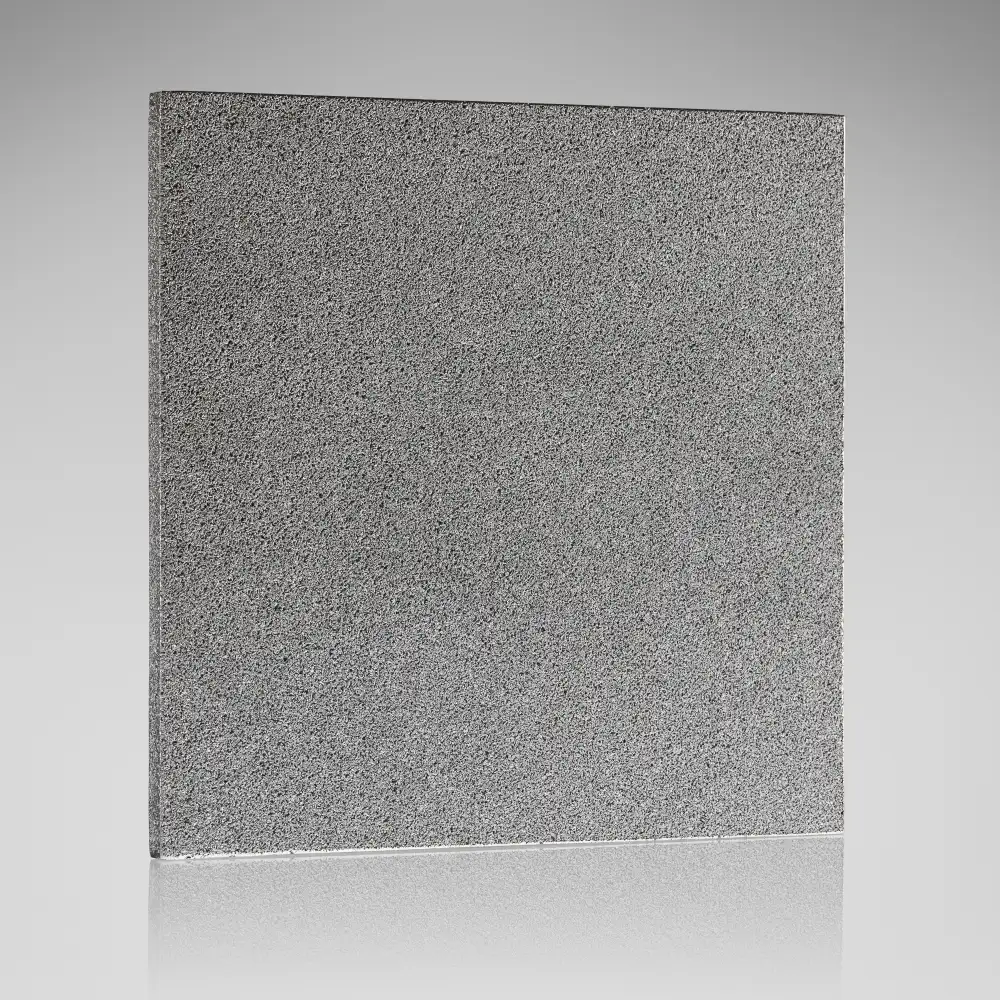
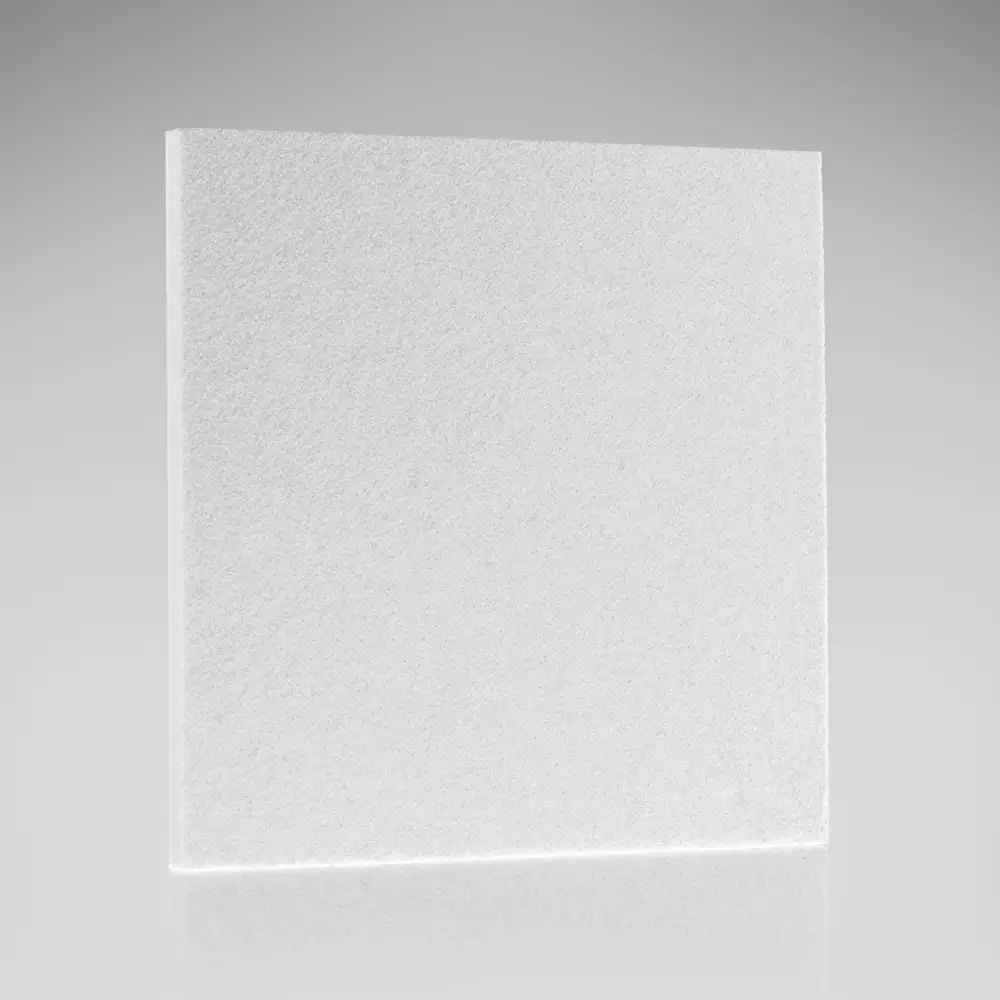
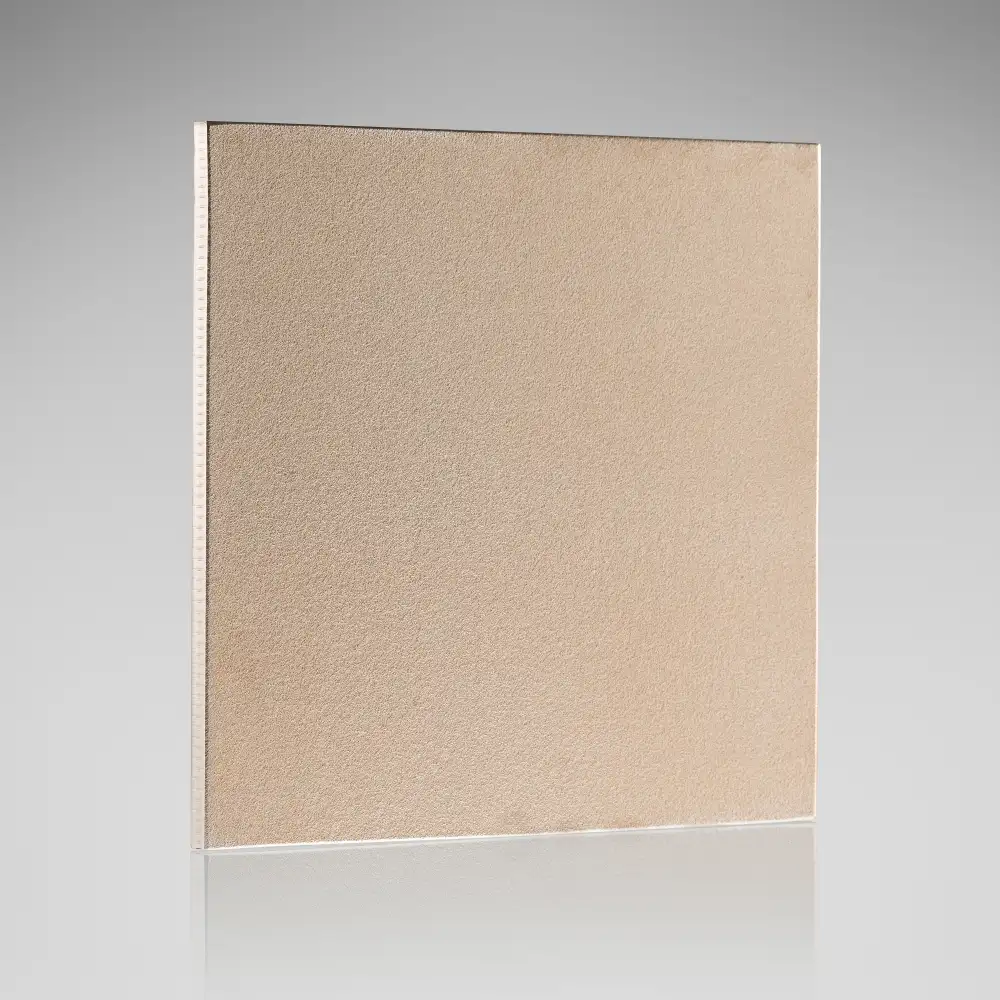
SIPERM® refers to porous sintered materials made of stainless steel, bronze, or polyethylene. They are manufactured with open pores using targeted powder processing and sintering technology. The materials offer customizable pore sizes, high mechanical strength, chemical resistance, and are available in various designs.


 Menu
Menu
Contact
We are happy to advise you – simply contact us by phone, via email or by using our contact form.
Service
Tridelta Siperm GmbH
Ostkirchstr. 177
44287 Dortmund, Germany