Custom solutions for demanding applications

Custom solutions for demanding applications
Our Address
Tridelta Siperm GmbH
Ostkirchstr. 177
44287 Dortmund, Germany
Inertization refers to the targeted reduction of the oxygen content in a system by introducing an inert gas. The aim is to avoid undesirable chemical reactions, oxidation or safety-critical conditions. Inertization is used for both process-related and safety-related reasons.
In contrast to ventilation, inerting is not about pressure equalization, but about actively changing the gas composition. In contrast to forming, the focus is not on the local protection of a limited area, but on the atmosphere of a volume or system as a whole.
Porous SIPERM® materials are suitable for inerting applications where inert gases are to be introduced into a system in a uniform, controlled and reproducible manner.
Inertization places specific requirements on the gas distribution elements used.
The inert gas must be introduced into the system as homogeneously as possible in order to avoid local oxygen residues or concentration differences. Selective gas supply often leads to inefficient displacement and increased gas consumption.
Inertization must lead to comparable results under the same operating conditions. A defined pore structure supports uniform gas release and stable process conditions.
Depending on the application, elevated temperatures, chemically contaminated gases or changing pressure conditions may occur. The porous materials used must remain permanently functional under these conditions.
Inertization must be clearly distinguished from other gas-related functions:
Ventilation is used to equalize the pressure without specifically changing the gas composition
Forming protects localized areas, e.g. weld roots
Explosion protection fulfills safety-relevant protective functions and is subject to normative requirements
Inerting is a process-active measure aimed at the controlled creation of a low-oxygen atmosphere.
For inertization tasks, porous materials are used that enable the uniform and controlled introduction of inert gases into a system. The decisive factor here is not the local protective effect, but the homogeneous setting of a low-oxygen atmosphere over a defined volume.
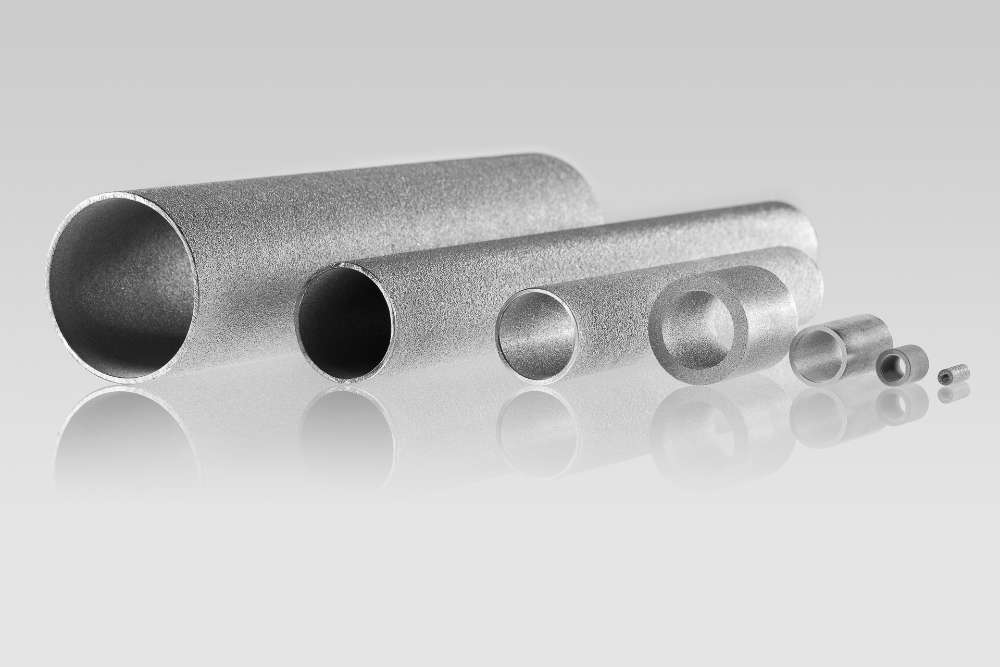
Porous stainless steel is particularly suitable for inerting applications where thermal, mechanical or chemical loads occur. The porous structure enables gas to be released over a wide area and supports the uniform displacement of oxygen from the system.
SIPERM® R is preferably used when:
increased temperatures are present
chemically contaminated process environments occur
reproducible inertization conditions are required
The stable pore structure allows continuous operation with a defined gas flow rate.
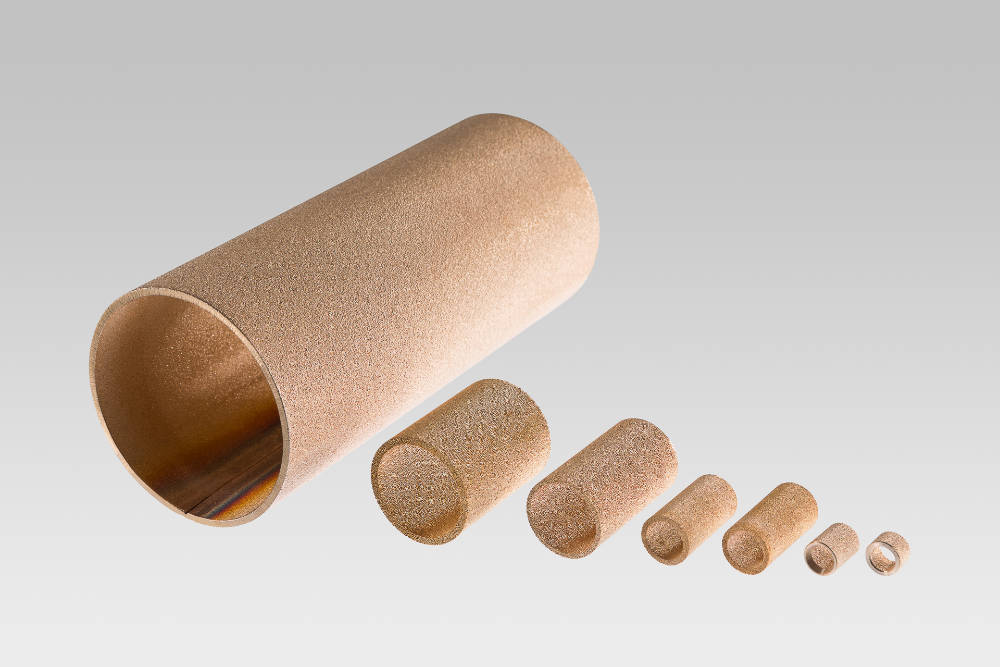
Porous bronze can be used for inerting applications where moderate temperatures and loads are present. The homogeneous pore structure supports uniform gas distribution and is suitable for applications where there are no increased safety-related requirements.
The choice between stainless steel and bronze is based on the application and takes into account the temperature range, process conditions and installation situation.
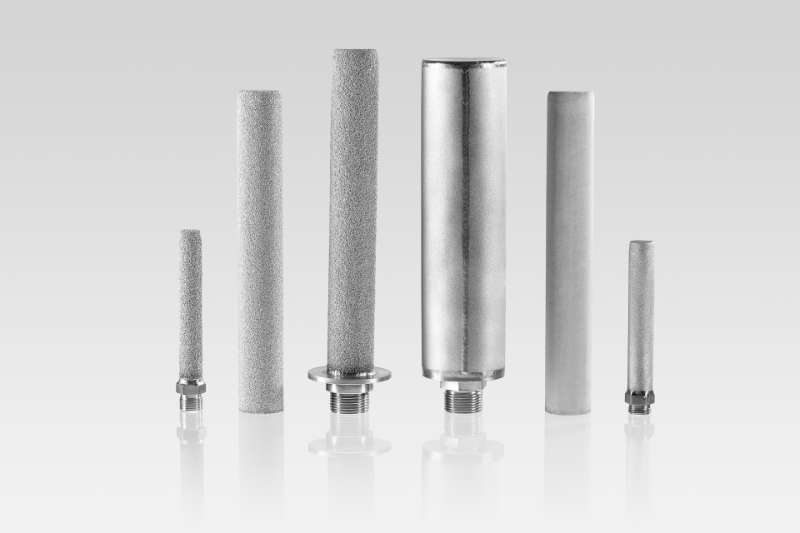
Porous inerting elements are realized in different geometries in order to adapt them to the respective application. Typical designs are
porous pipes for the extensive introduction of gas along a volume
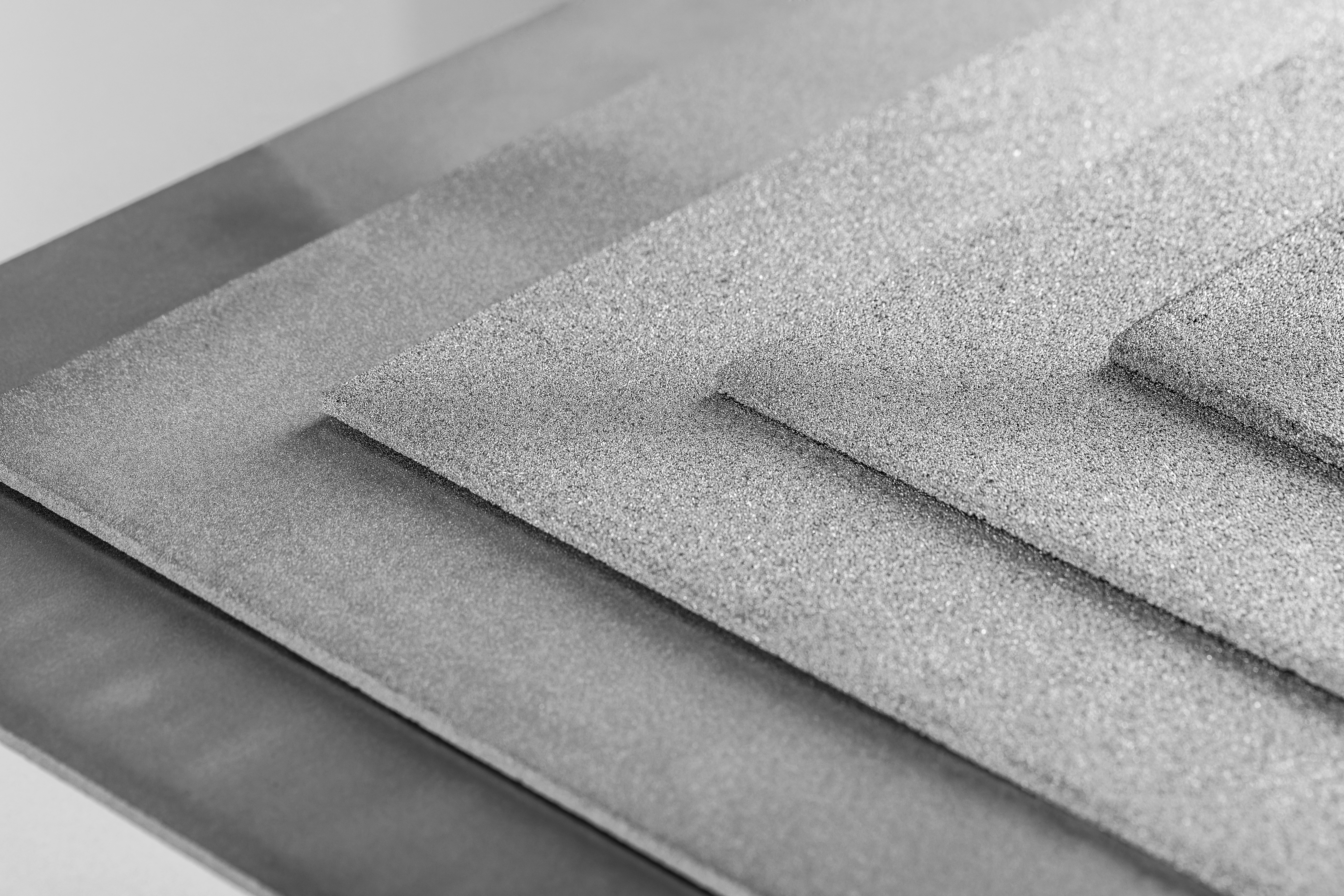
Porous plates or sheets for even gas distribution
Customized moulded parts for integration into containers, reactors or system components
Uniform oxygen displacement is achieved and inert gas consumption is optimized thanks to the extensive gas release.
Inerting is used to create a low-oxygen atmosphere as part of the process. It must be clearly distinguished from explosion protection, where safety-relevant protective functions are the main focus and normative requirements must be taken into account.
While inerting is often part of a process concept, explosion protection is designed as an independent safety measure.
We are happy to advise you – simply contact us by phone, via email or by using our contact form.
Tridelta Siperm GmbH
Ostkirchstr. 177
44287 Dortmund, Germany


 Menu
Menu
 Call
Call