Custom solutions for demanding applications


Custom solutions for demanding applications
Our Address
Tridelta Siperm GmbH
Ostkirchstr. 177
44287 Dortmund, Germany
Fluidization and discharge describe processes in which bulk materials are loosened up by the targeted supply of gas in the discharge area to enable a continuous and controlled flow of material from silos, hoppers or containers. The aim is to avoid flow disturbances and stabilize the discharge process.
In contrast to fluidized bed conveying, fluidization and discharge do not focus on conveying over a distance, but rather on activating the bulk material in the discharge area. The gas introduced reduces the internal frictional forces of the material and thus facilitates discharge by gravity or downstream conveying equipment.
Fluidization and discharge systems are used when bulk materials tend to have flow problems or when a uniform discharge cannot be reliably guaranteed, particularly in the case of
Bridging in silos or hoppers
Shaft formation with fine-grained or cohesive bulk solids
uneven or intermittent discharge
inactive zones in the discharge area
Unstable dosing and dispensing processes
Through targeted fluidization, the discharge can be stabilized independently of filling level fluctuations.
Wherever fine-grained bulk materials have to be transported and stored, difficulties can arise when conveying and discharging from silo containers. This applies in particular to fine powders such as flour, food additives, spices, cement, pigments, carbon black or fine plastic powders.
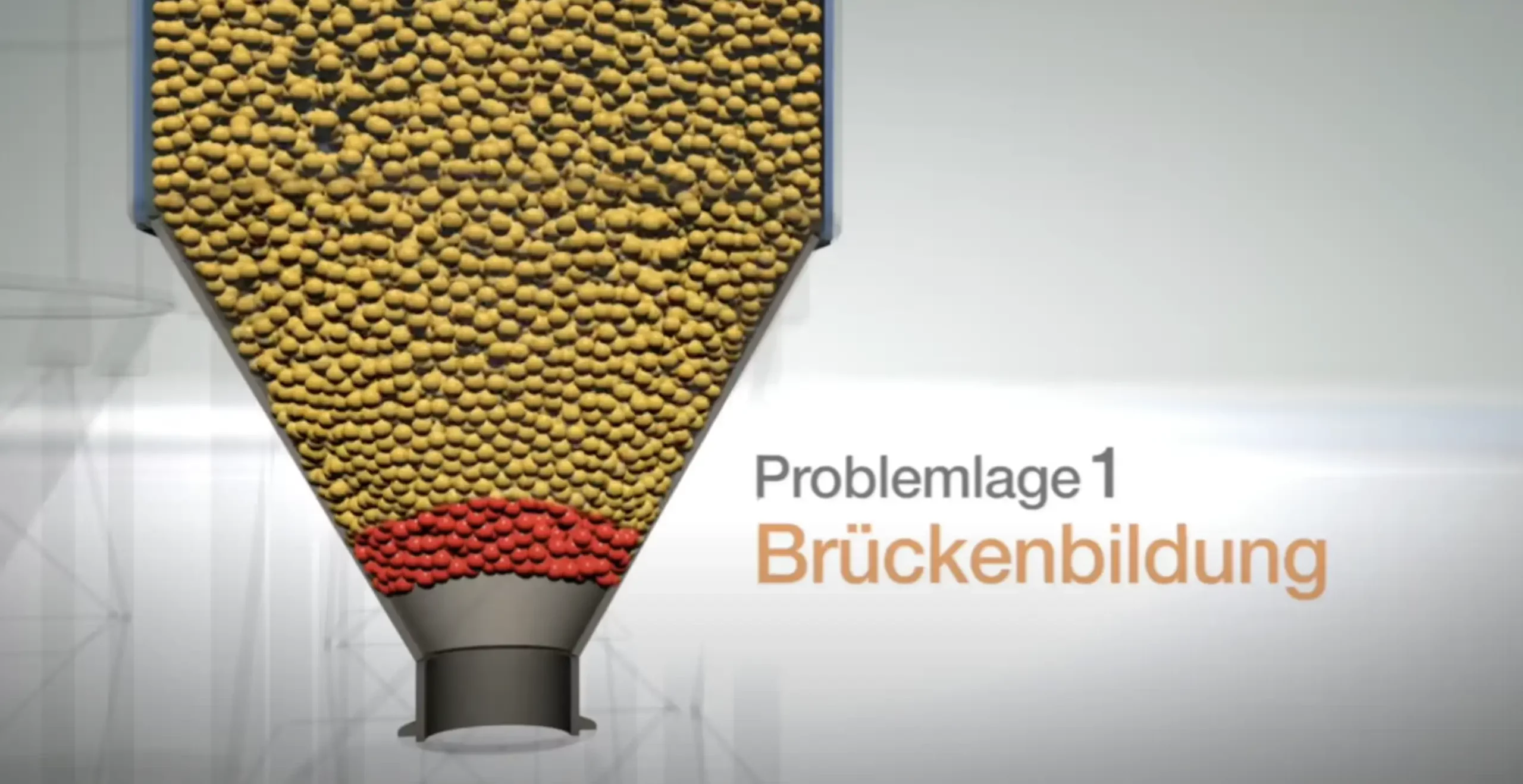
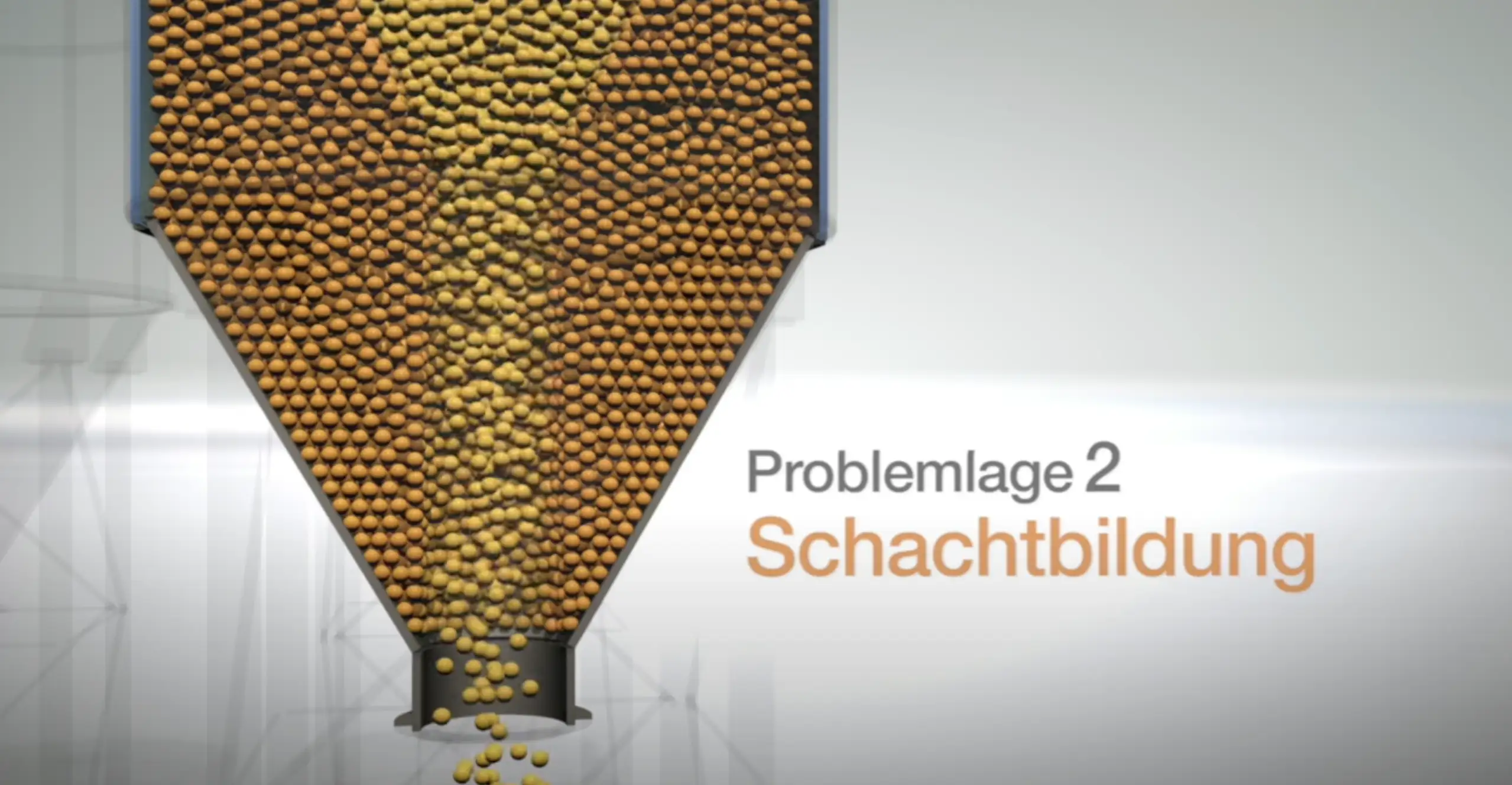
In silos and storage containers, bridging or shaft formation occurs time and again, which can prevent a uniformly fast discharge from the container. In many cases, the material flow even comes to a complete standstill at the silo discharge or silo areas are not emptied at all for long periods of time.
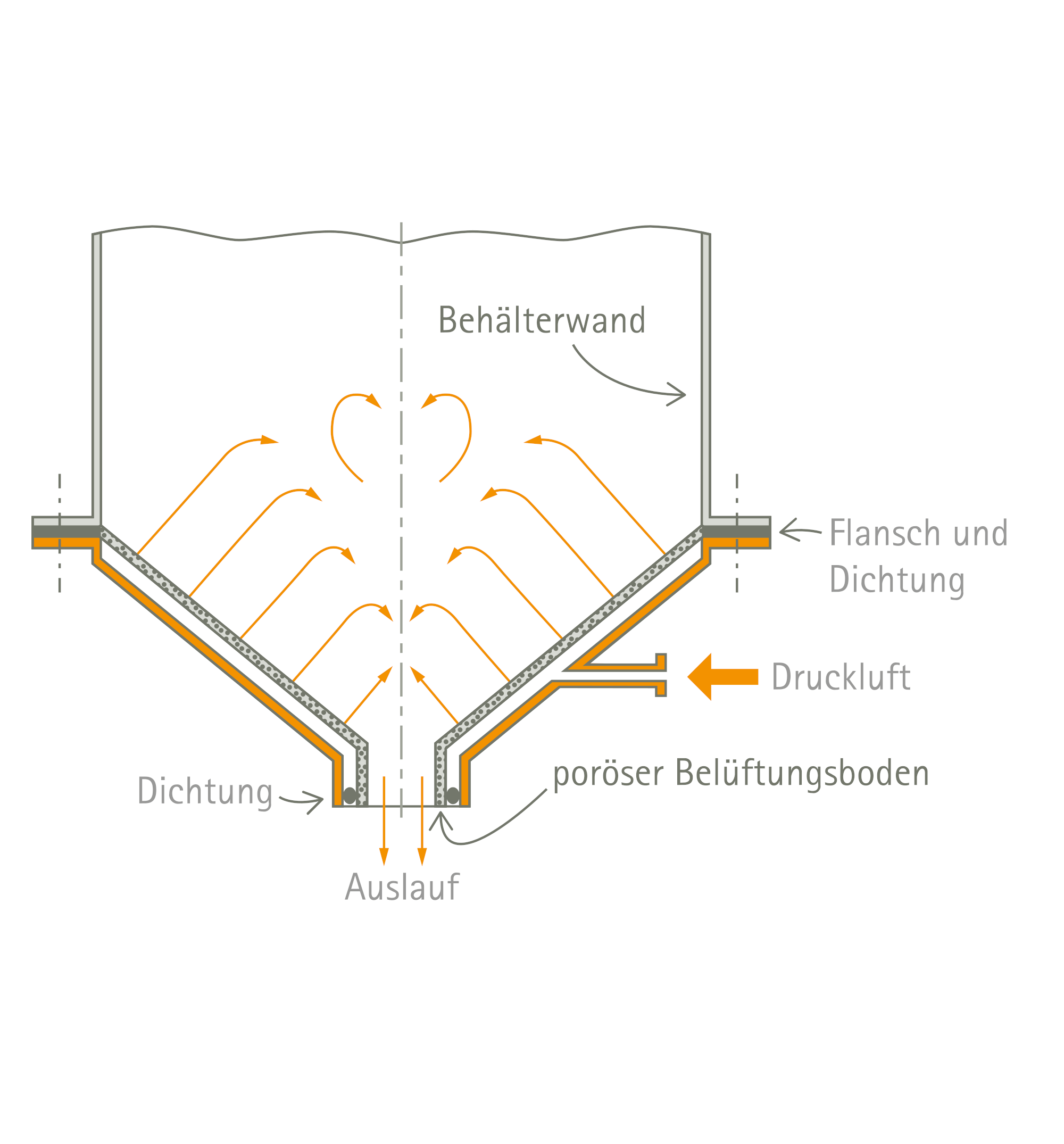
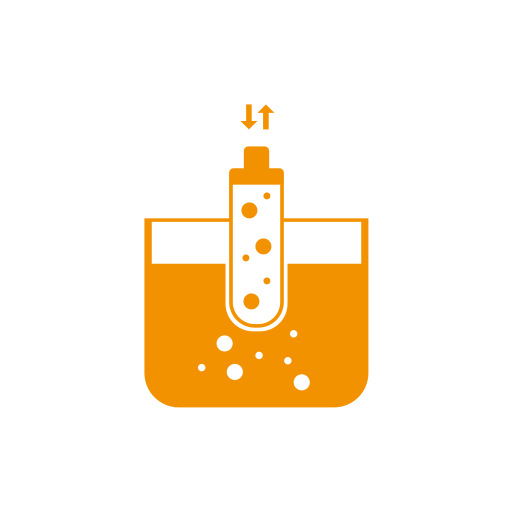
During fluidization, gas is introduced into the bulk material via porous elements. The gas escapes evenly over the surface of the porous structure and is distributed throughout the material.
The gas supply reduces the contact and adhesive forces between the particles and between the bulk material and the container wall. This loosens up the material in the discharge area and allows it to flow evenly. Spot air inlets are avoided as they can lead to localized flow peaks and uncontrolled material movement.
The fluidization is designed in such a way that it supports the discharge without whirling up or discharging the bulk material in an uncontrolled manner.
Uniformly designed fluidization has a direct effect on the discharge process. The bulk material is activated in the discharge area so that:
bridges and standstill zones are avoided
the material flow is continuous
the discharge remains reproducible and controllable
downstream dosing or conveying stages operate stably
Fluidization therefore makes a significant contribution to process reliability and system availability.
Porous SIPERM® materials are used for fluidizing and discharging bulk solids. These materials enable the uniform, flat introduction of gas and at the same time withstand the process-related mechanical loads.
The porosity class is selected depending on the particle size, bulk solids properties, desired fluidization intensity and process control.
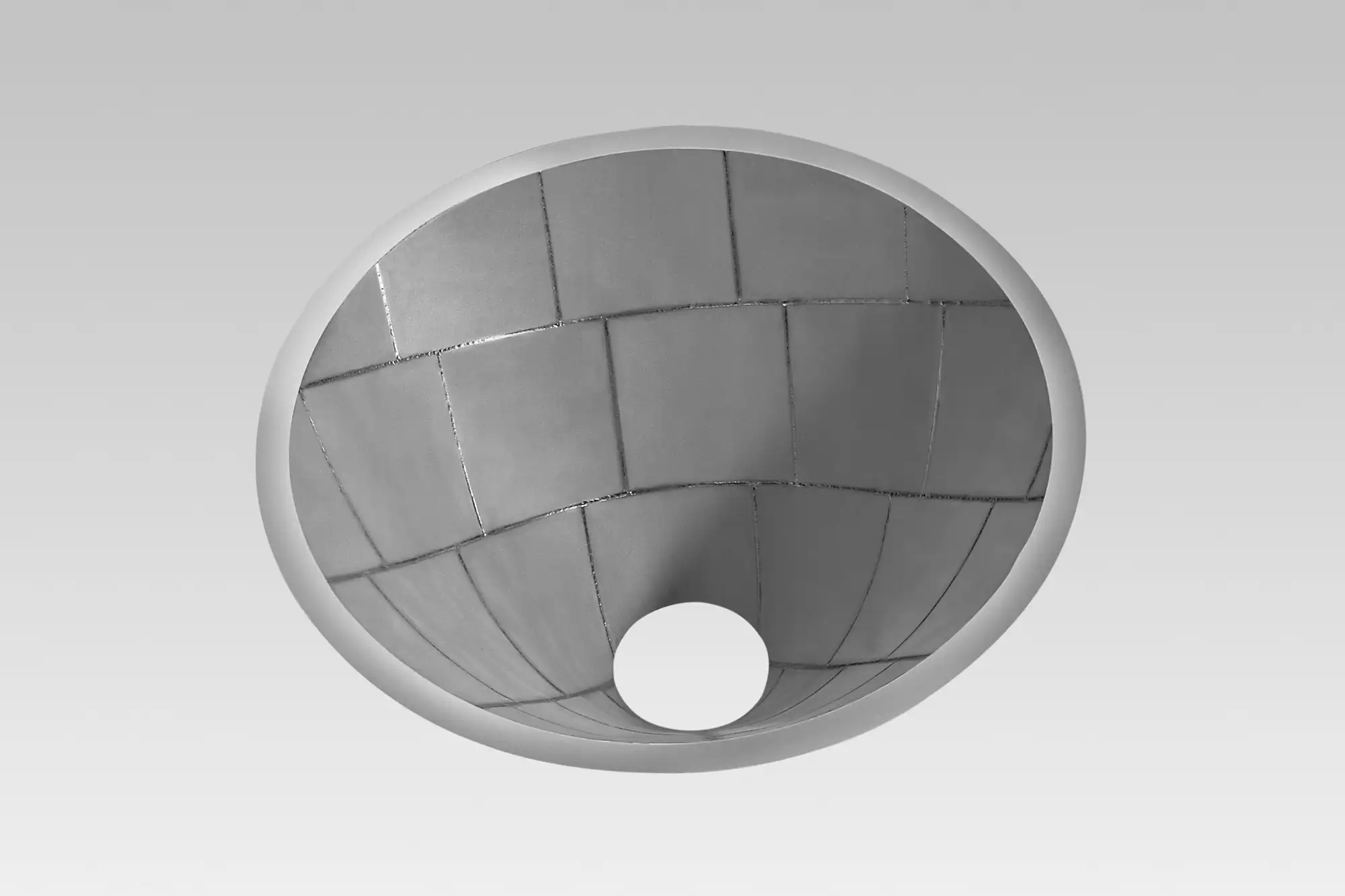
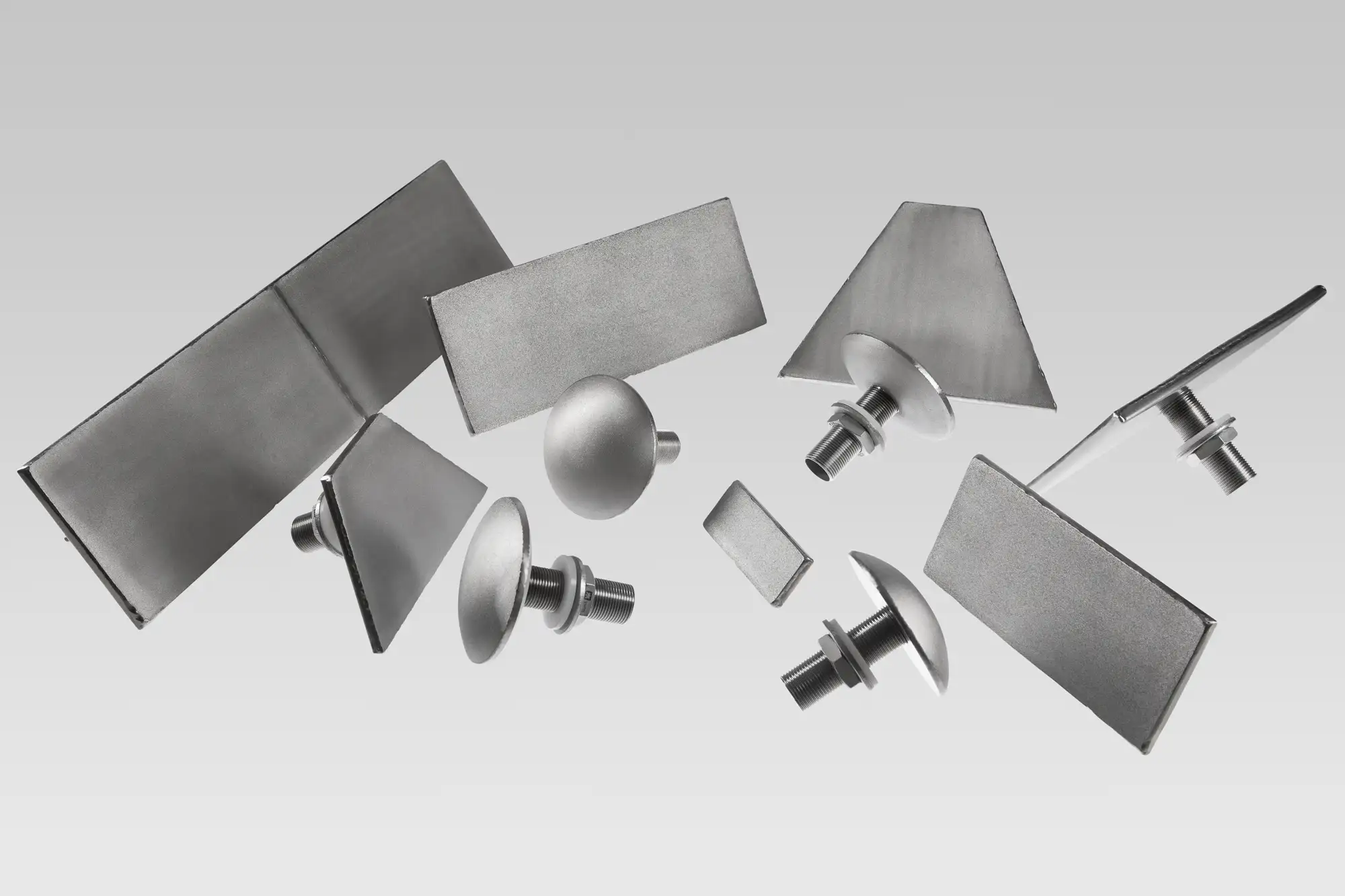
Material for both large fluidizing trays and small variants or ready-to-install aeration elements in bulk material handling; suitable for robust, industrial discharge applications.
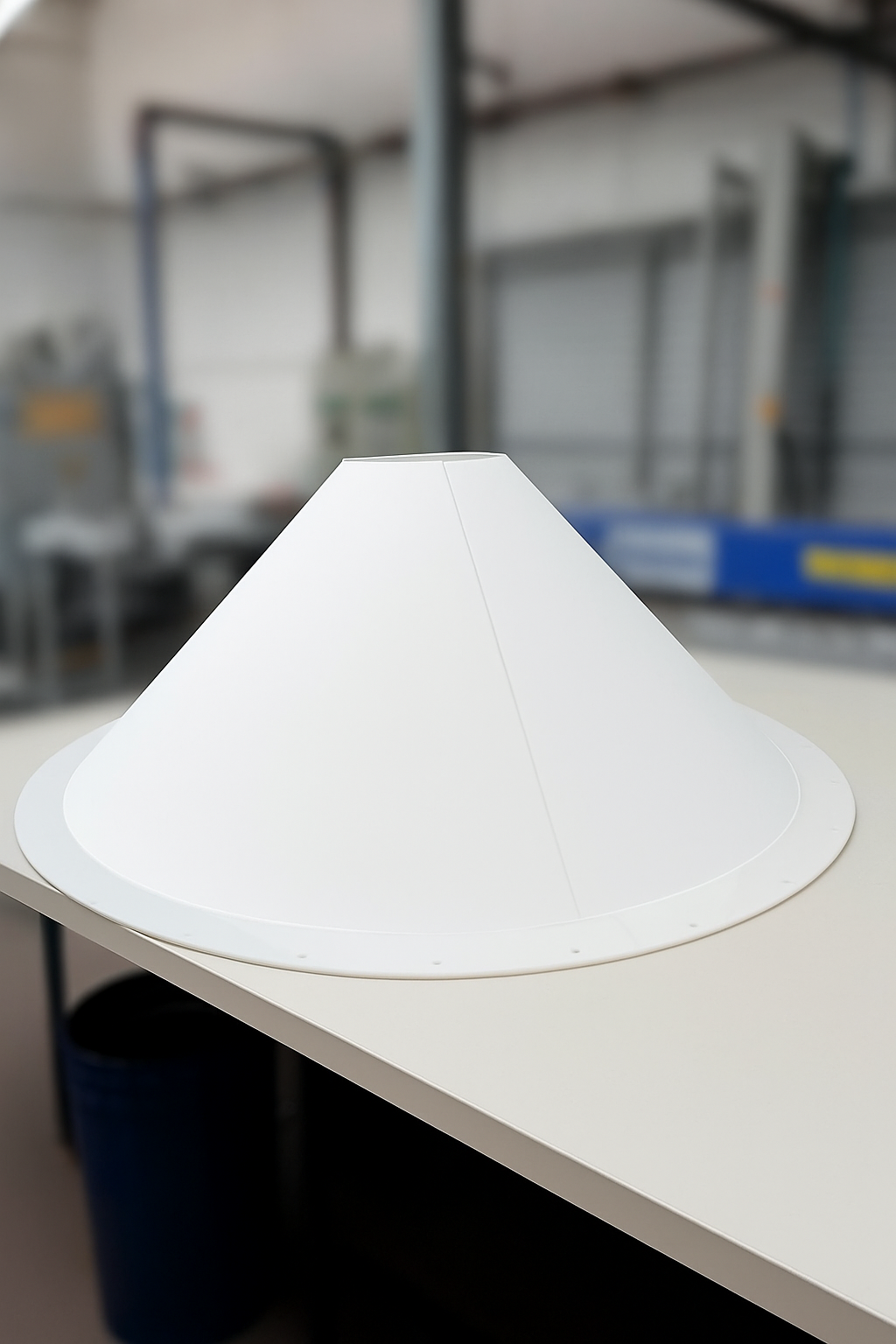
Suitable for fluidization and discharge applications at lower temperatures and mechanical loads. SIPERM® HP is used when polymer-based materials are sufficient and uniform gas introduction is required.
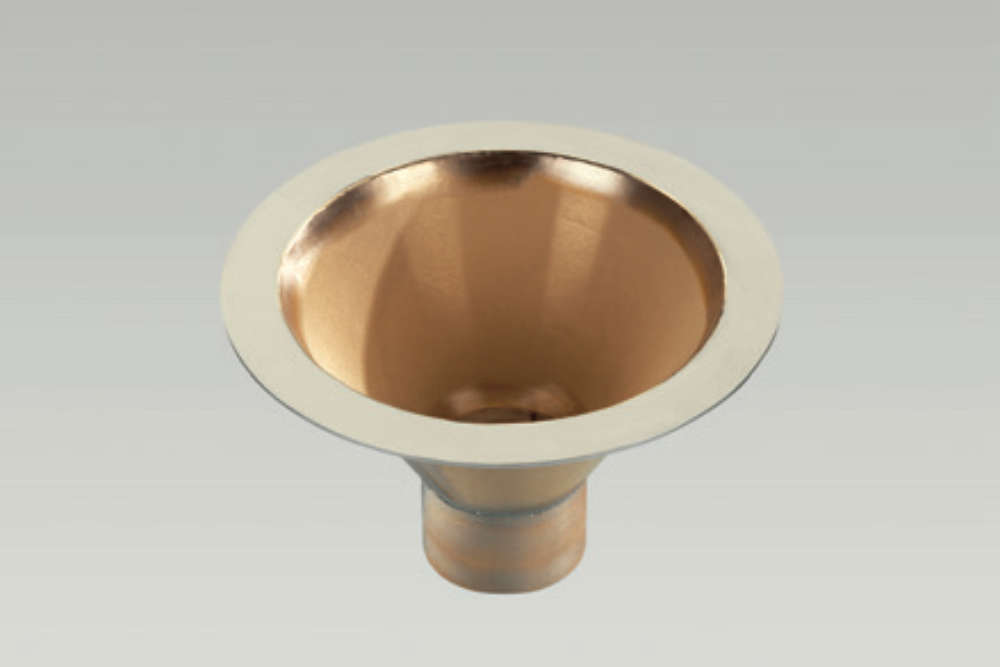
Used for moderate loads. The homogeneous pore structure supports uniform gas distribution and is suitable for numerous standard fluidization and discharge applications.
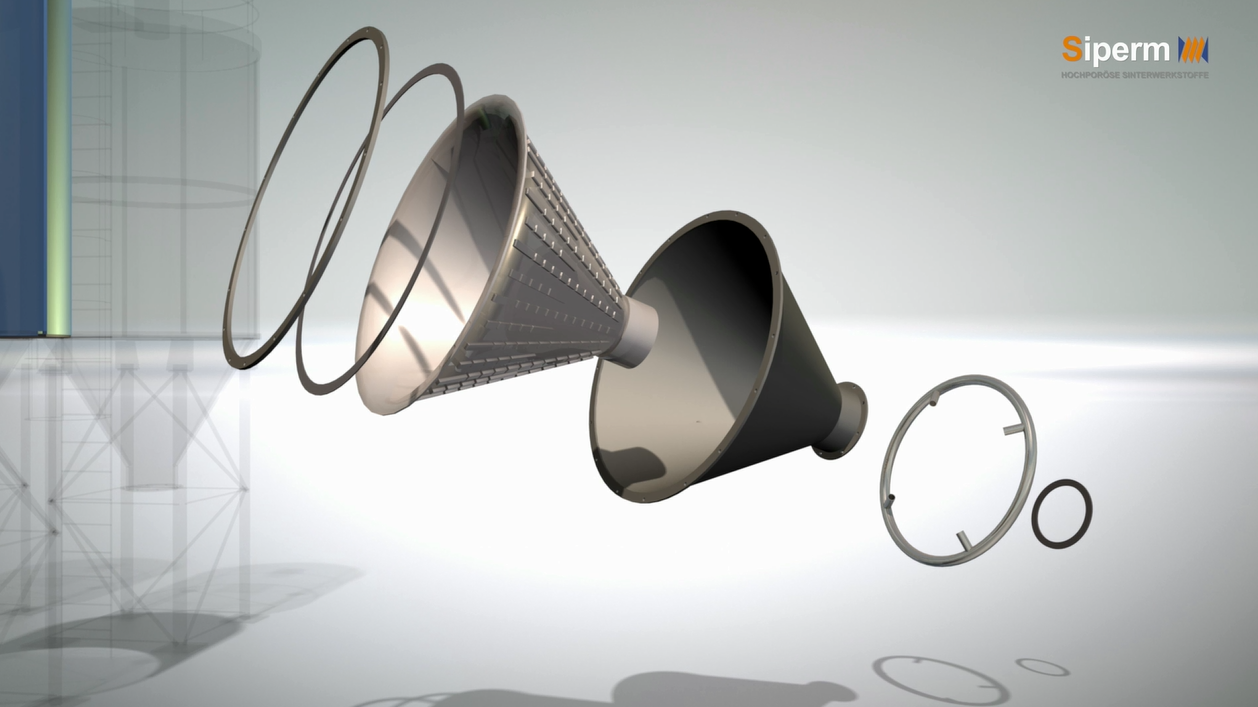
Porous SIPERM® components for fluidization and discharge are designed in different geometries in order to adapt them optimally to the respective discharge area:
Fluidizing floors for silos and containers
porous ventilation elements in the hopper or discharge area
Segmented fluidization elements for targeted activation of individual zones
customized designs
The designs are designed in such a way that the gas is introduced evenly into the bulk material and no preferential flow paths are created.
We are happy to advise you – simply contact us by phone, via email or by using our contact form.
Tridelta Siperm GmbH
Ostkirchstr. 177
44287 Dortmund, Germany



 Menu
Menu Call
Call
